Maison Horlogère Suisse · La Chaux‑de‑Fonds · Genève

Since 1787.
Few are made. All are kept.

A Swiss watchmaking house founded in La Chaux‑de‑Fonds and at work in Geneva, whose timepieces have passed from the bench into the Metropolitan Museum of Art, the British Museum, the Patek Philippe Museum and the Musée international d’horlogerie.

Ultra-thin gold pocket watch with engraved silvered dial, shown face-on and in profile Gold pocket watch with an enamel and gold automaton scene of a fisherman at a mill Mobilis silver pocket watch with the tourbillon carriage visible beneath the small dial Gold pocket watch with an enamel scene of a garden pavilion and automaton figures Modernista pocket watch with silver engine-turned dial, jumping hour aperture and retrograde minutes Gold pocket watch with white enamel dial showing two time zones and a centigrade thermometerGold pocket watch case entirely set with seed pearls, turquoises and rubies in a spiral pattern

Maison Courvoisier has maintained a continuous presence since 1787.

Two hundred and thirty‑nine years of Swiss watchmaking, from the high valleys of Neuchâtel to the ateliers of Geneva — royal commissions, patents adopted across the industry, and pieces kept by the world’s great museums.

1787

J. Robert & Fils, Courvoisier & Cie · La Chaux‑de‑Fonds

1842

The flattest watch in the world, for the King of Prussia

1905

Mobilis — the tourbillon seen through the dial

8 museums

New York · London · Genève · La Chaux‑de‑Fonds · Istanbul · Jerusalem · Le Locle

La Maison

Two centuries, two cities, one signature.

The house takes its name from Louis Courvoisier, who in 1781 became the principal associate of Josué Robert’s workshop in La Chaux‑de‑Fonds — a workshop that had held the watchmaker’s patent of the King of Prussia, sovereign of Neuchâtel, since 1725.

Courvoisier family coat of arms: a gold four-pointed star above a gold heart on blue, between olive branches
The family arms: a four‑pointed star above a heart, on blue, between olive branches. The star is the Maison’s mark.

The notarial deeds of 1784 and 1788 record the firm as J. Robert & Fils, Courvoisier & Cie. From 1787, the year the Maison keeps as its own, the Courvoisier signature has been present on Swiss timepieces.

Under the names Robert & Courvoisier and, from 1811, Courvoisier & Cie — with houses in La Chaux‑de‑Fonds, Genève and Paris — the Maison made the enamelled and automaton watches that museums keep today, and pieces for the courts of Prussia, Russia, Portugal, the Ottoman Empire, the Second French Empire and the House of Savoy. In 1842 the town of La Chaux‑de‑Fonds commissioned from it the flattest watch in the world, a gift to King Friedrich Wilhelm IV.

The family name stood at the head of the house into the twenty‑first century. Its seat is now Genève, where dials are painted, fired and engraved by hand; part of the work is still carried out in La Chaux‑de‑Fonds.

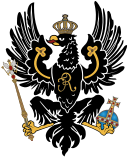
Arms of the Kingdom of Prussia
Prussia
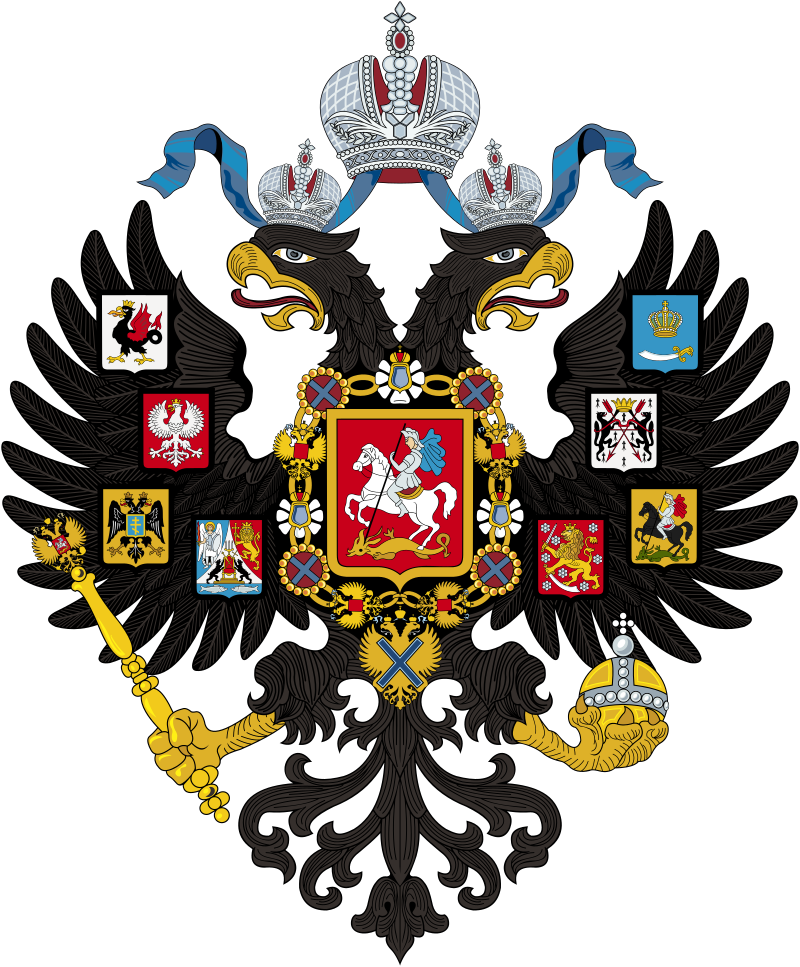
Arms of the Russian Empire
Russian Empire
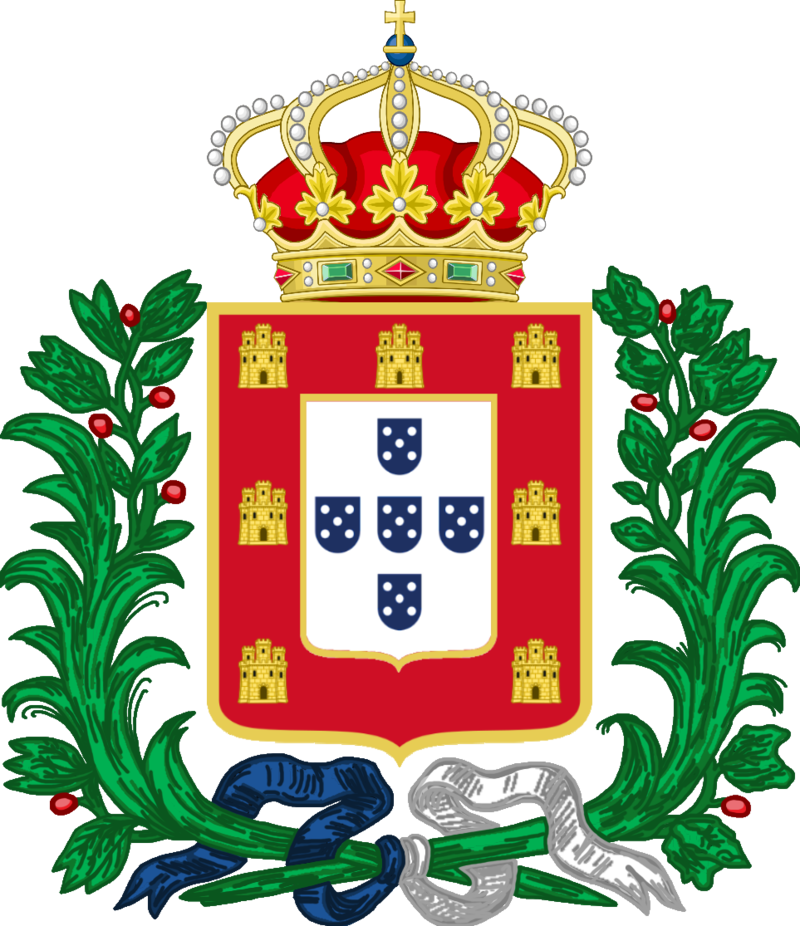
Arms of the Kingdom of Portugal
Portugal
Arms of the Ottoman Empire
Ottoman Empire
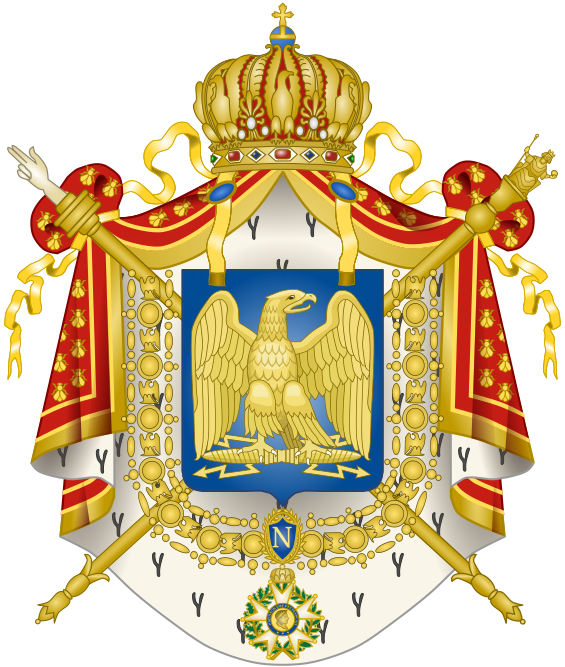
Imperial arms of France, 1852 to 1870
Second French Empire
Royal monogram of Victor Emmanuel III of Italy
House of Savoy

Courts for which the Maison Courvoisier made pieces.

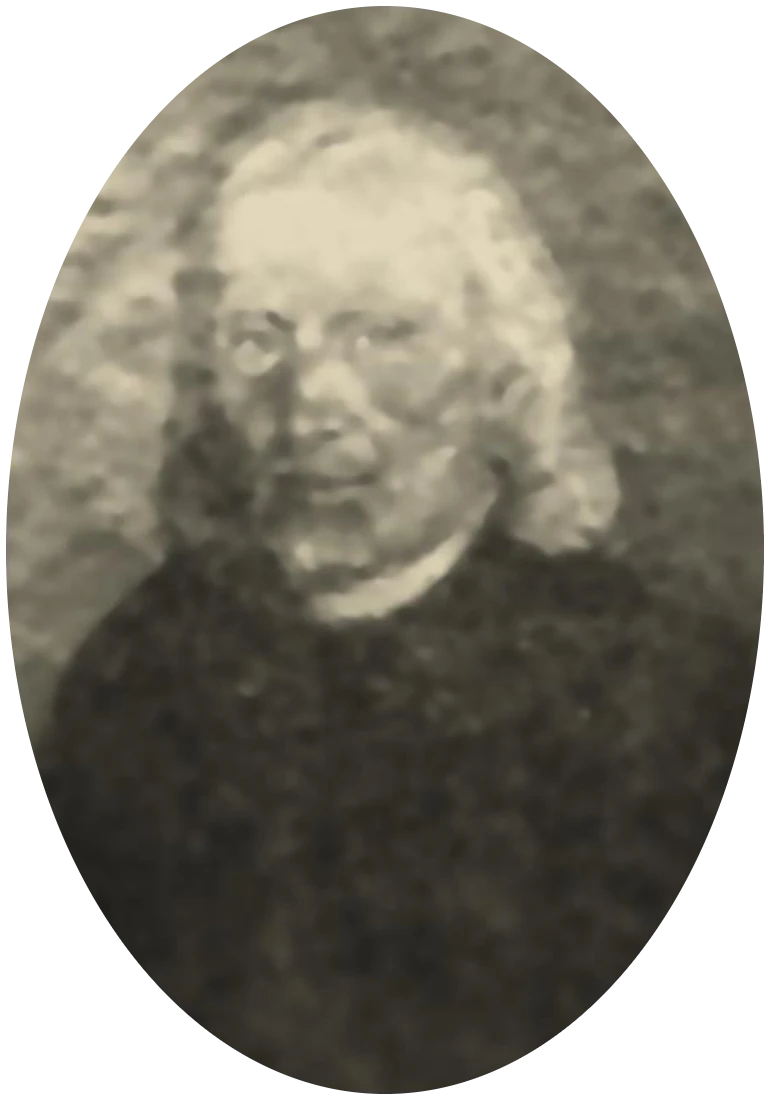
Portrait of Josué Robert (1691–1771), after a painted portrait

Josué Robert

1691 – 1771 · Watchmaker to the King of Prussia

Watchmaker’s patent of the King of Prussia, La Chaux‑de‑Fonds, 1725 — the royal foundation of the house. After his son’s death his daughter‑in‑law Charlotte Robert managed the firm: a woman at the head of an eighteenth‑century enterprise.

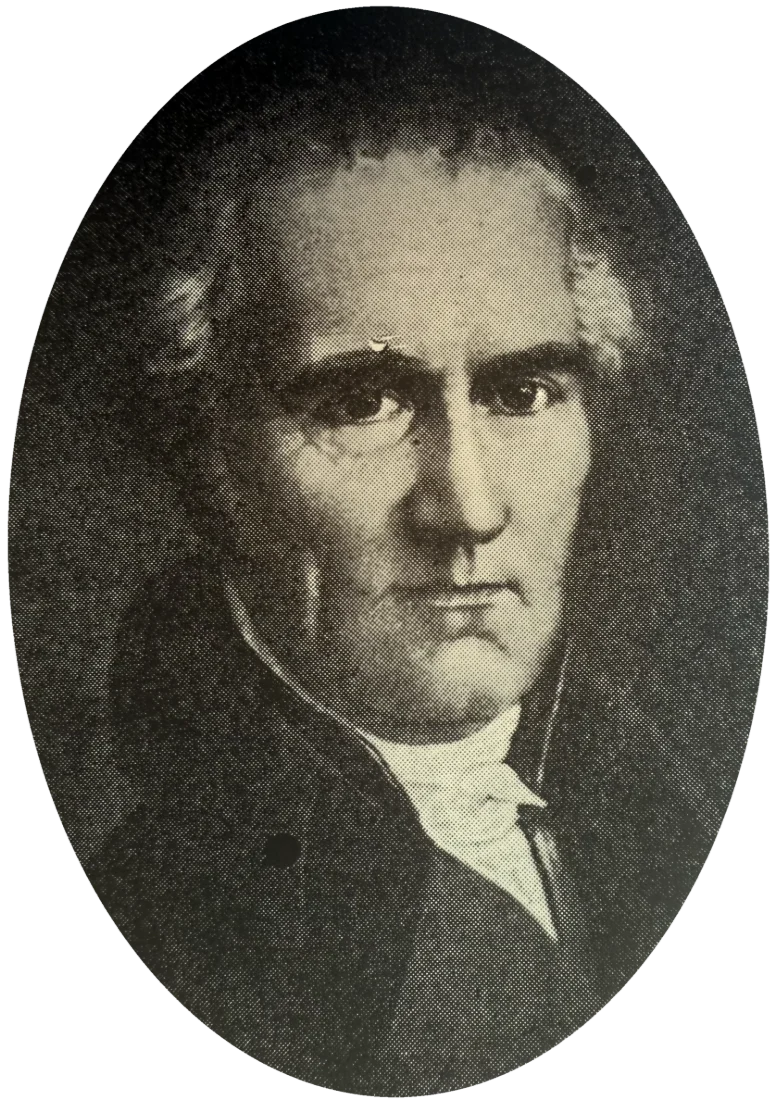
Portrait of Louis Courvoisier, oval engraving

Louis Courvoisier

1758 – 1832 · Founder of the Maison

Principal associate of the Robert workshop from 1781; J. Robert & Fils, Courvoisier & Cie, 1787. His marriage to Julie Houriet joined the house to Jacques‑Frédéric Houriet, the father of Swiss chronometry.

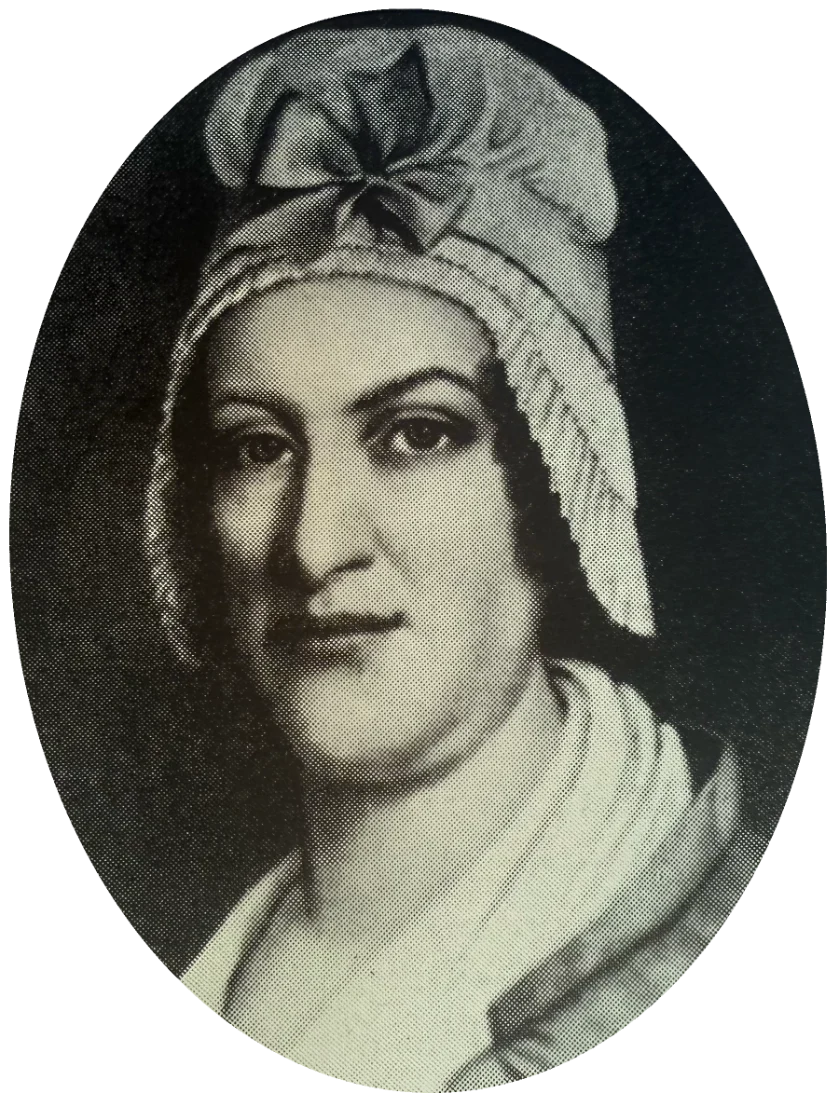
Portrait of Julie Courvoisier, née Houriet, oval engraving

Julie Courvoisier, née Houriet

Daughter of Jacques‑Frédéric Houriet

Wife of Louis Courvoisier and daughter of Jacques‑Frédéric Houriet of Le Locle, the father of Swiss chronometry. Through her, the house was joined to the Houriet workshop and to the science of precision timekeeping.

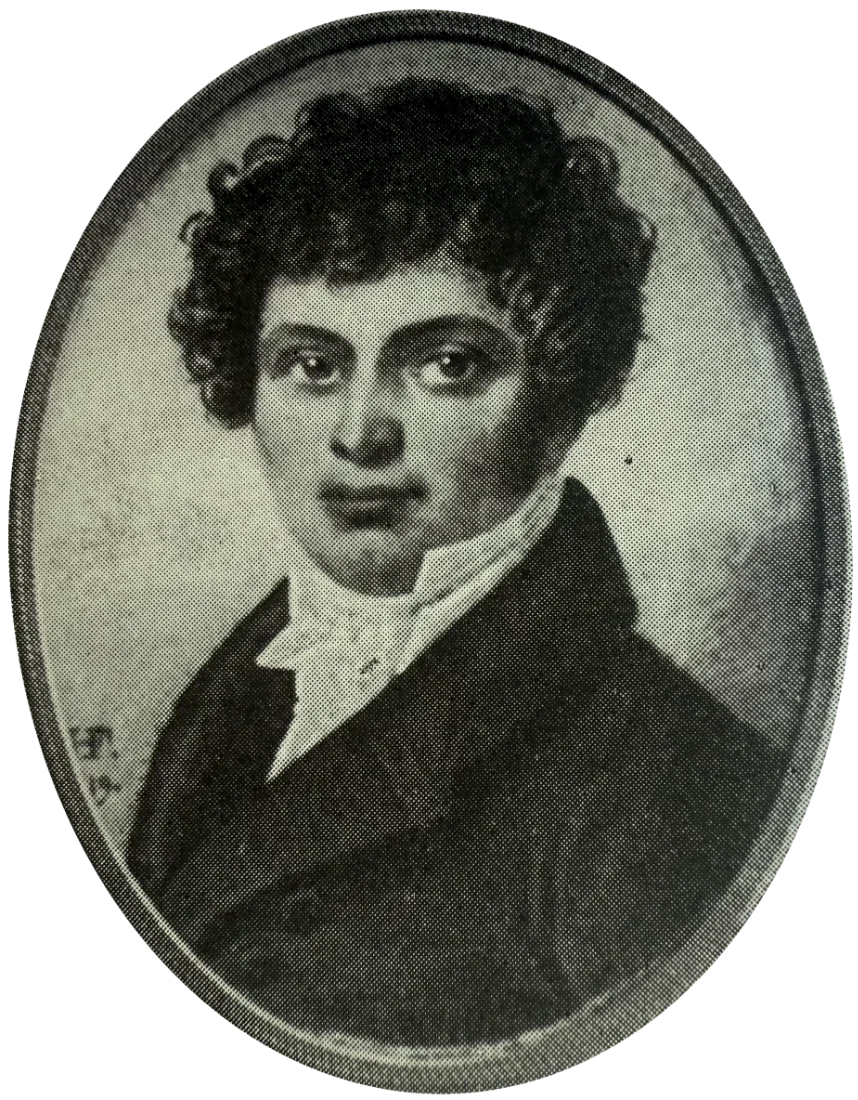
Portrait of Henri-Louis Courvoisier, oval engraving

Courvoisier Frères

Henri‑Louis 1796 – 1868 · Philippe‑Auguste 1803 – 1873 Portrait: Henri‑Louis Courvoisier

From 1842 the brothers’ house made the celebrated pieces of the nineteenth century — the Prussia commission, the Ottoman portrait watches, the enamel of the Second Empire — and registered the patents and marks of the twentieth.

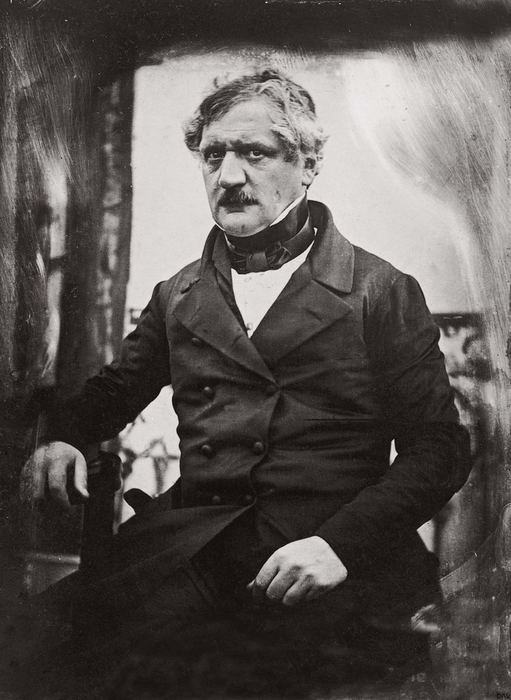
Photographic portrait of Fritz Courvoisier, seated
Frédéric‑Alexandre “Fritz” Courvoisier (1799–1854) — watchmaker, republican, national hero; commissioner at the Great Exhibition of 1851.
1799 – 1854

Fritz Courvoisier: the watchmaker who declared a republic.

Fritz took the management of the family house in 1825 and founded his own enterprise in the 1830s. A tireless traveller, he studied the watchmaking of France, Italy, Portugal and Russia and opened trade with Egypt and Turkey; his journeys to Russia in the 1830s are recorded with the names of the Maison’s correspondents in St Petersburg and Moscow, Rosenstrauch and Cattoire among them.

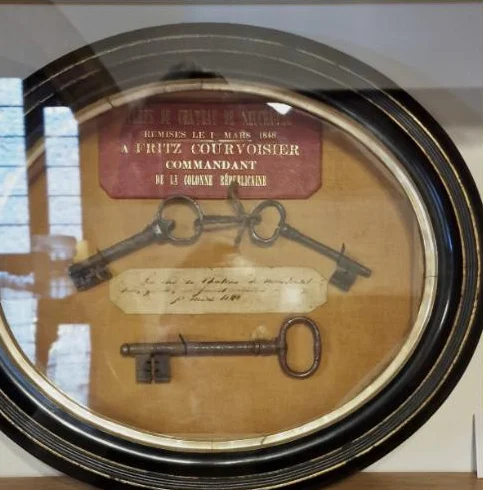
On 1 March 1848 he led the republican column from La Chaux‑de‑Fonds to the Castle of Neuchâtel, took it, and ended Prussian rule over the canton. He sat in the Grand Conseil until his death and represented the canton in the Conseil national. In 1851 he was appointed commissioner for the Great Exhibition of London.

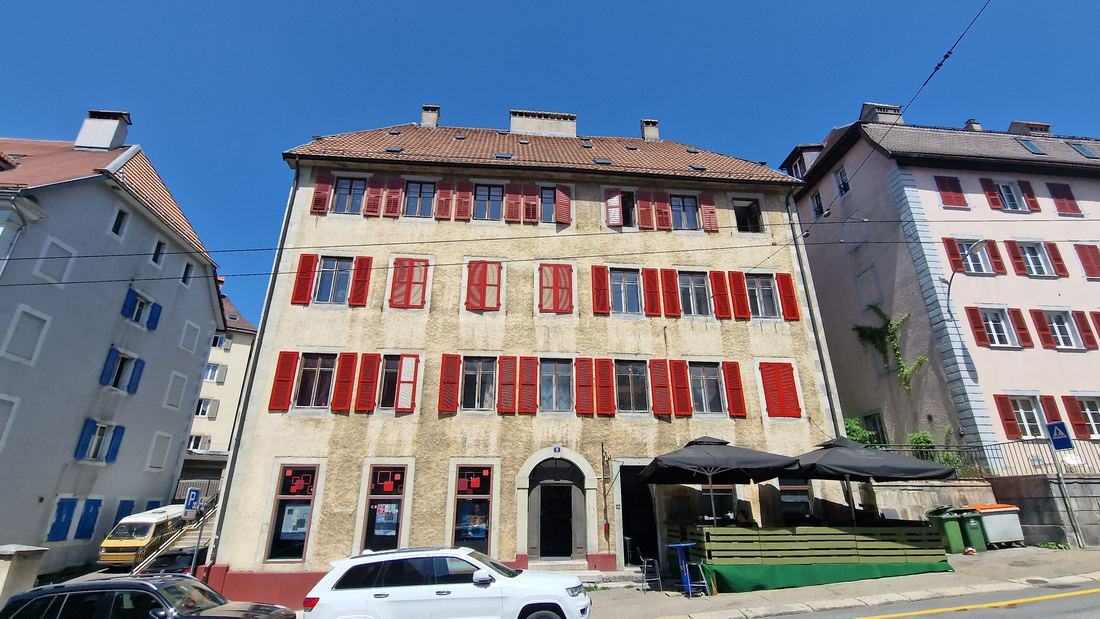
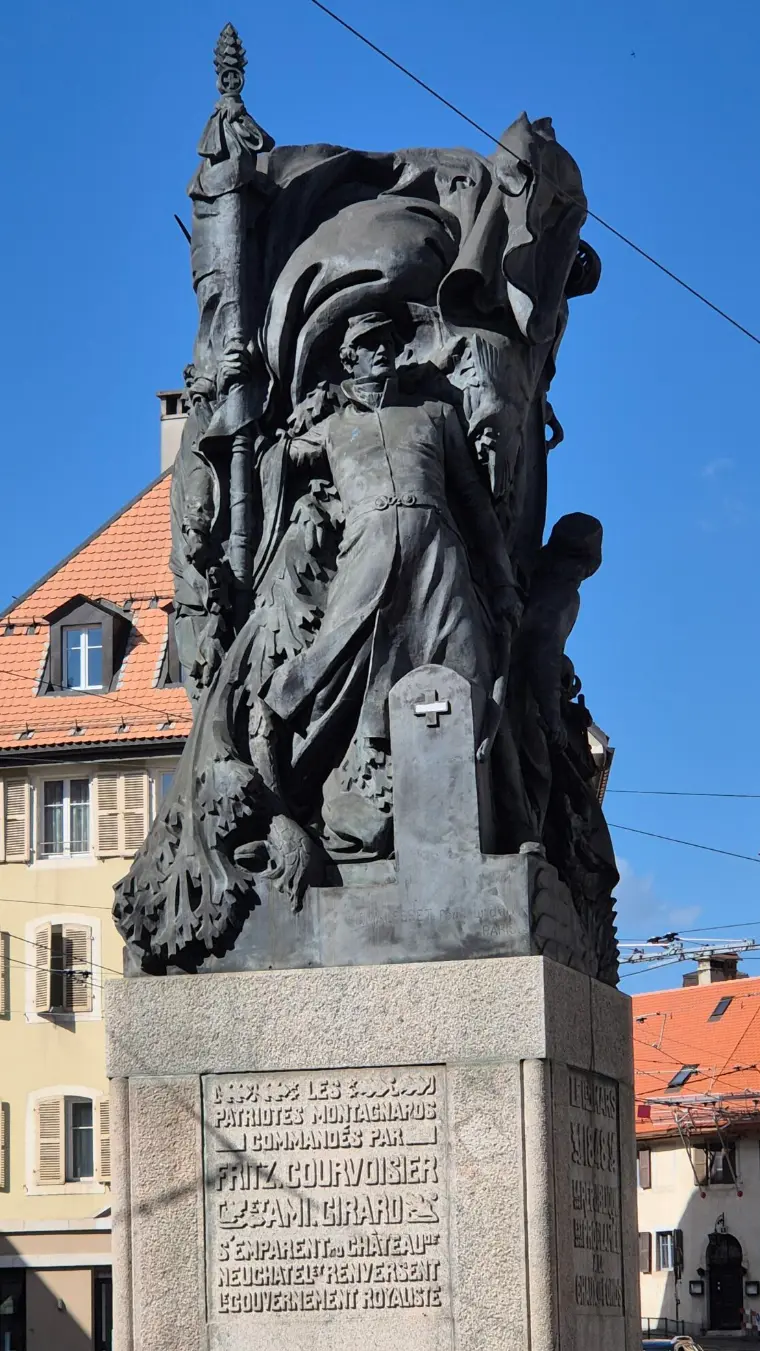
The town honoured him in permanence: he is named on the Monument de la République before the Hôtel de Ville, and the street of the first manufacture carries his name. In April 2023 a ceremony in his honour was held at the Castle of Neuchâtel, attended by descendants of the family.

Keys of the Château de Neuchâtel in a glazed oval frame, with the red label recording their surrender to Fritz Courvoisier on 1 March 1848
Keys of the Château de Neuchâtel, surrendered on 1 March 1848 to Fritz Courvoisier, commander of the republican column.Château de Neuchâtel, seat of the Conseil d’État
Façade with red shutters at rue Fritz-Courvoisier 11, La Chaux-de-Fonds
Rue Fritz‑Courvoisier 11 — the house of the first manufacture.Photographed May 2026
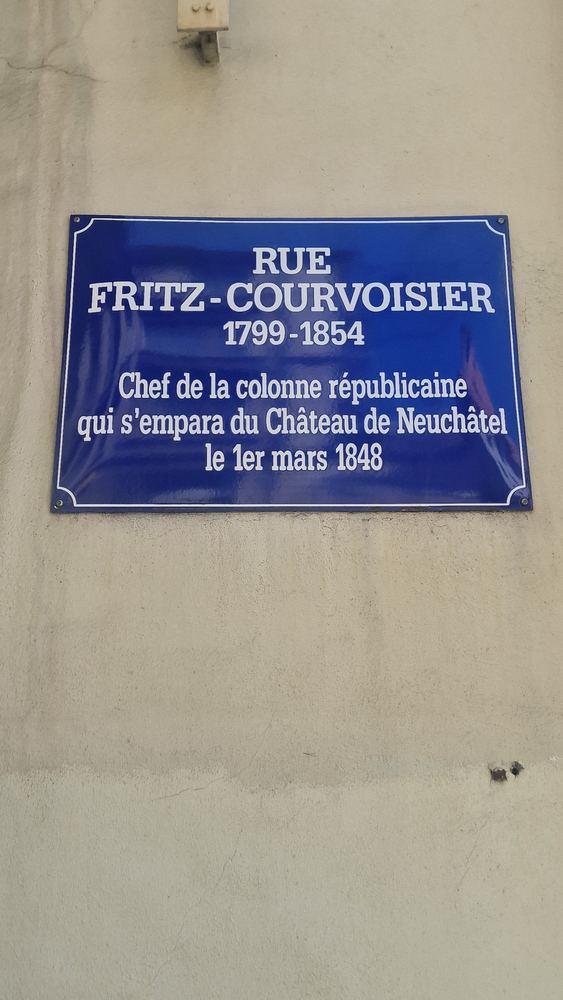
Blue street plaque: Rue Fritz-Courvoisier 1799–1854
“Chef de la colonne républicaine qui s’empara du Château de Neuchâtel le 1er mars 1848.”
Bronze monument of the Neuchâtel republicans on its granite plinth, inscribed with the name of Fritz Courvoisier, La Chaux-de-Fonds
Monument de la République, Place de l’Hôtel‑de‑Ville — Charles L’Eplattenier, 1910. The plinth names Fritz Courvoisier.

La Chaux‑de‑Fonds

Founding city · 1787

Inscribed by UNESCO as a town planned around watchmaking, La Chaux‑de‑Fonds is the manufacturing heart of Swiss horology. The Maison’s ateliers stood here for two centuries — rue du Pont 13 and rue des Terreaux 33 in the twentieth century, both inspected and authorised under federal factory law — and the Musée international d’horlogerie keeps thirteen Courvoisier pieces in the founding city.

The Jet d’Eau on Lake Geneva, the Swiss flag and the Geneva waterfront
Genève, where most of the Maison’s work is carried out today.

Genève

Ateliers · 1811 to today

Under Louis Courvoisier the house worked from La Chaux‑de‑Fonds, Genève and Paris; the enamel cases of the Ottoman portrait watches were made in Genève; by 1893 the Versoix factory of Courvoisier & Co., Genève, was honoured as Commandeur of the Order of Christ of Portugal. Today the Maison’s dials are painted, fired and engraved in Genève — the city of the Patek Philippe Museum that collects Courvoisier, and of the Musée d’art et d’histoire that preserves it.

A watch from this house was never meant to be sold twice. It was meant to be kept, and then handed on.The Maison

Métiers d’Art

The enamel tradition, continued by hand.

The earliest masterpieces of the house were painted in enamel and fired in the kiln, where a single error meant total loss. That tradition is the Maison’s first work today: one miniature painting, fired in grand‑feu enamel on a 40 mm dial, made for one collector.

Les Jours d’Alcyone — two kingfishers over a river, painting for a grand-feu enamel dial
Les Jours d’Alcyone
Painting for the first dial of the Métiers d’Art collection.Original painting commissioned by the Maison, 2026, for grand‑feu enamel · in production
N° I · Genève et ses environs

Les Jours d’Alcyone.

A pair of kingfishers over the river, and the courtship gift of a fish. Every Métiers d’Art painting is commissioned from a living painter before it is entrusted to a Geneva enamel atelier for firing. The case is engraved by hand to continue the world of the dial.

The collector receives, with the watch, the original painting, the test‑firing plate and a letter from the artistic direction — a Commission Dossier that establishes the piece’s authorship for good. No subject is repeated. No piece is repeated.

Further subjects are announced when they are ready, and not before.

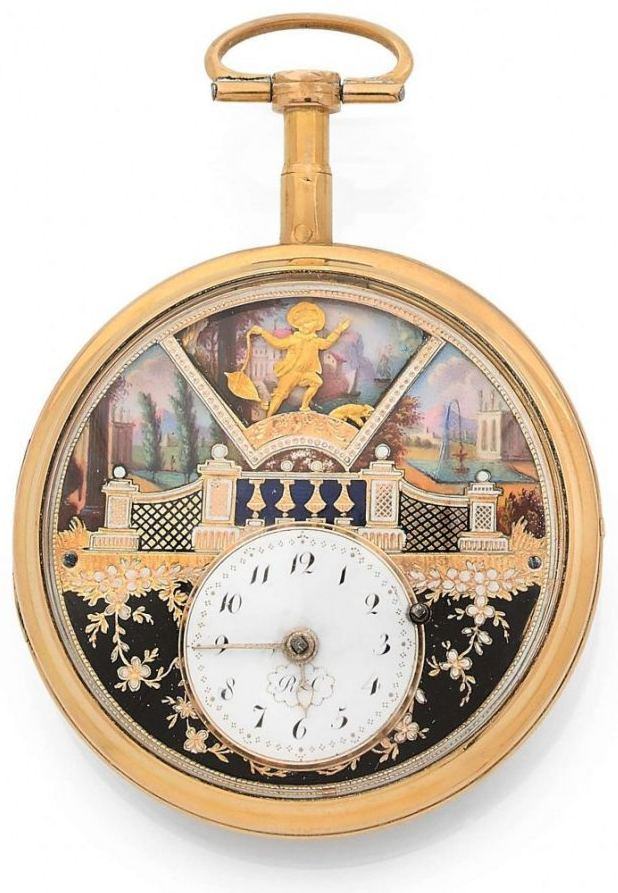
Gold pocket watch with an enamel scene of a garden pavilion and automaton figures above a dial
Where the tradition begins: automaton watch in painted enamel, Robert & Courvoisier, c. 1800.
By allocation only

No piece is offered for sale on this page or elsewhere. Each is allocated to one collector after a conversation with the Maison.

One painting, one piece

The original painting and its Commission Dossier accompany the watch. The subject will not be painted again.

A waiting period is usual

Production is limited to a handful of pieces a year. Requests are reviewed individually.

Les Collections

Four historic signatures, in preparation.

Beyond the Métiers d’Art, four signatures of the Maison are at the bench, each drawn from its own patent and its own registered mark. None is announced with a date. Each will be introduced when it is ready, in the order below.

1904 – 1905 · Patent CH 30754 / 568 · Mark N° 19 062
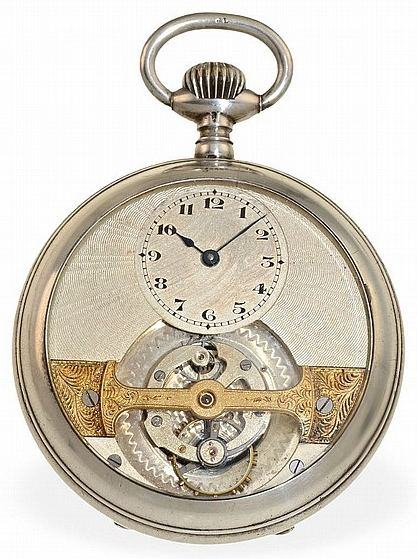
MobilisThe tourbillon seen through the dial

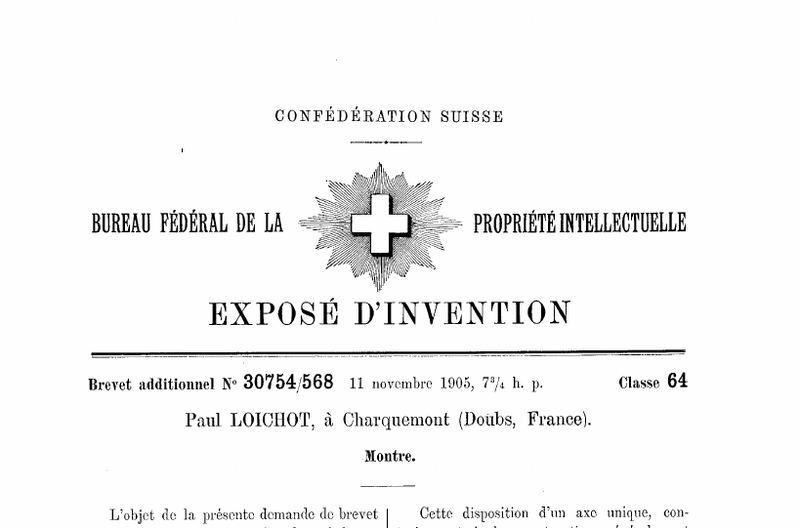
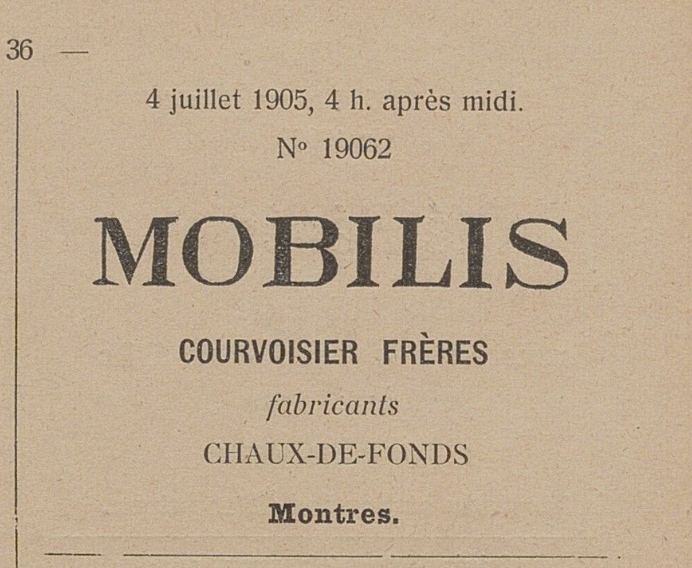
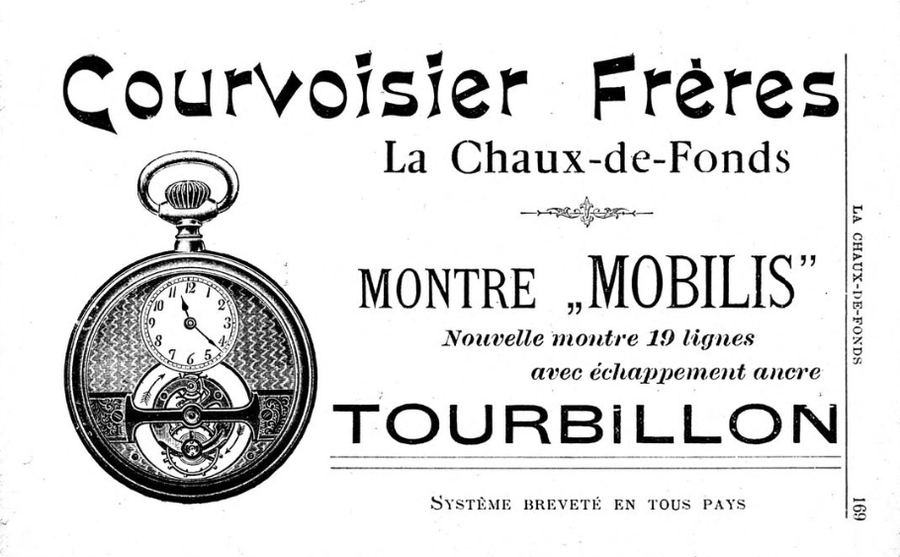
Paul Loichot’s construction for Courvoisier Frères inverts the tourbillon: the carriage turns in plain view beneath the small dial, in an inverted 19‑ligne calibre. The 1905 advertising called it a tourbillon for everyone — the first made commercially accessible beyond a handful of chronometers. The trade mark MOBILIS was registered on 4 July 1905. Examples are kept by the British Museum and pass through Christie’s and Antiquorum in Geneva.

Sources · Bureau fédéral de la propriété intellectuelle, brevets N° 30754 (1904) et 30754/568 (1905) · Archives de l’horlogerie, marques de fabrique, vol. V

The carriage completing one revolution each minute — drawn after the 1904 patent.
Mobilis silver pocket watch with the tourbillon carriage visible beneath the small dial
Mobilis, c. 1905 · silver, tourbillon visible dial‑side
1903 · Patent CH 27838 / 538 · Mark N° 16 713
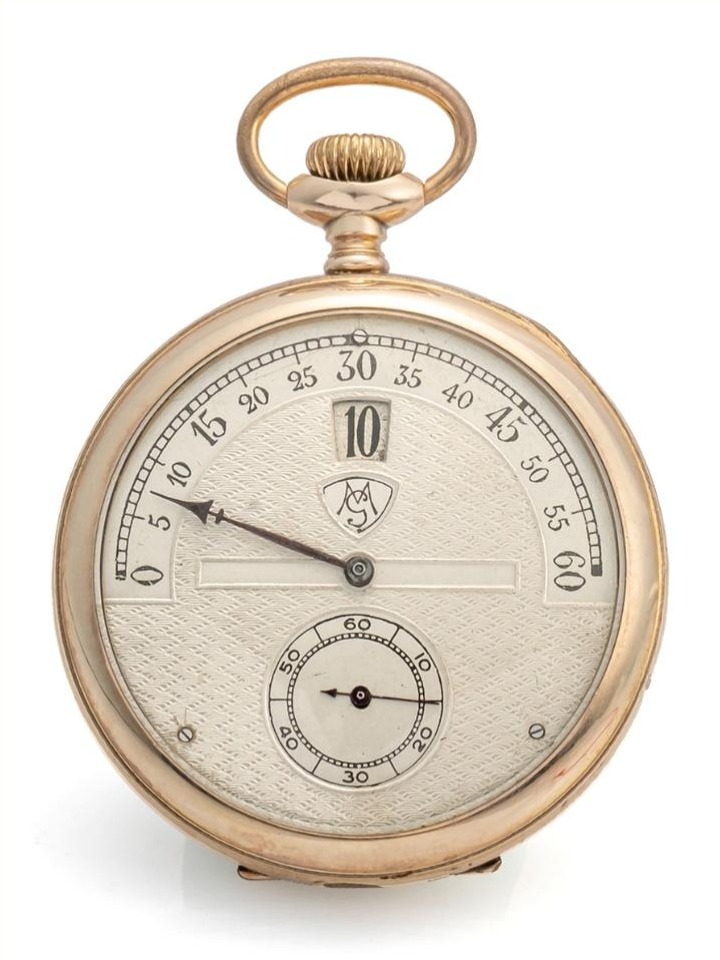
ModernistaJumping hour, retrograde minutes

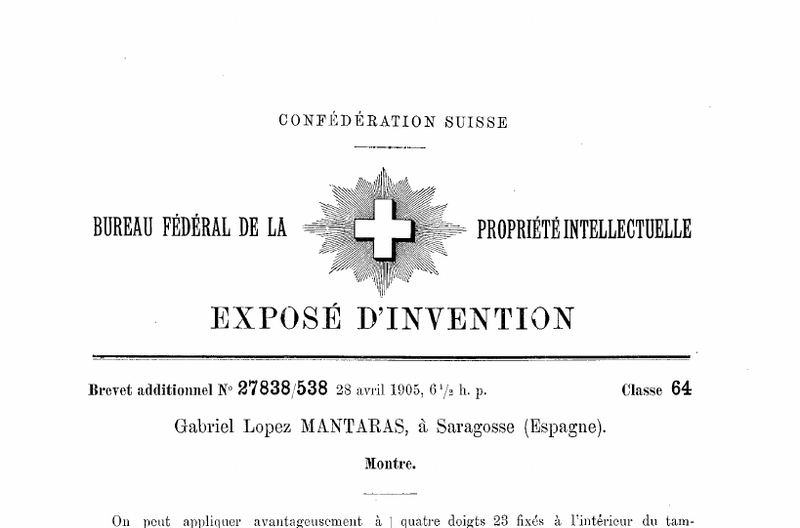
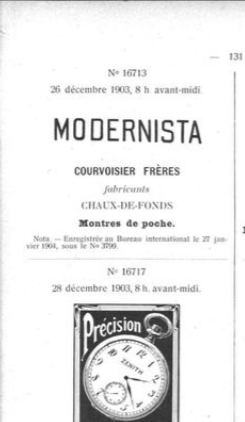
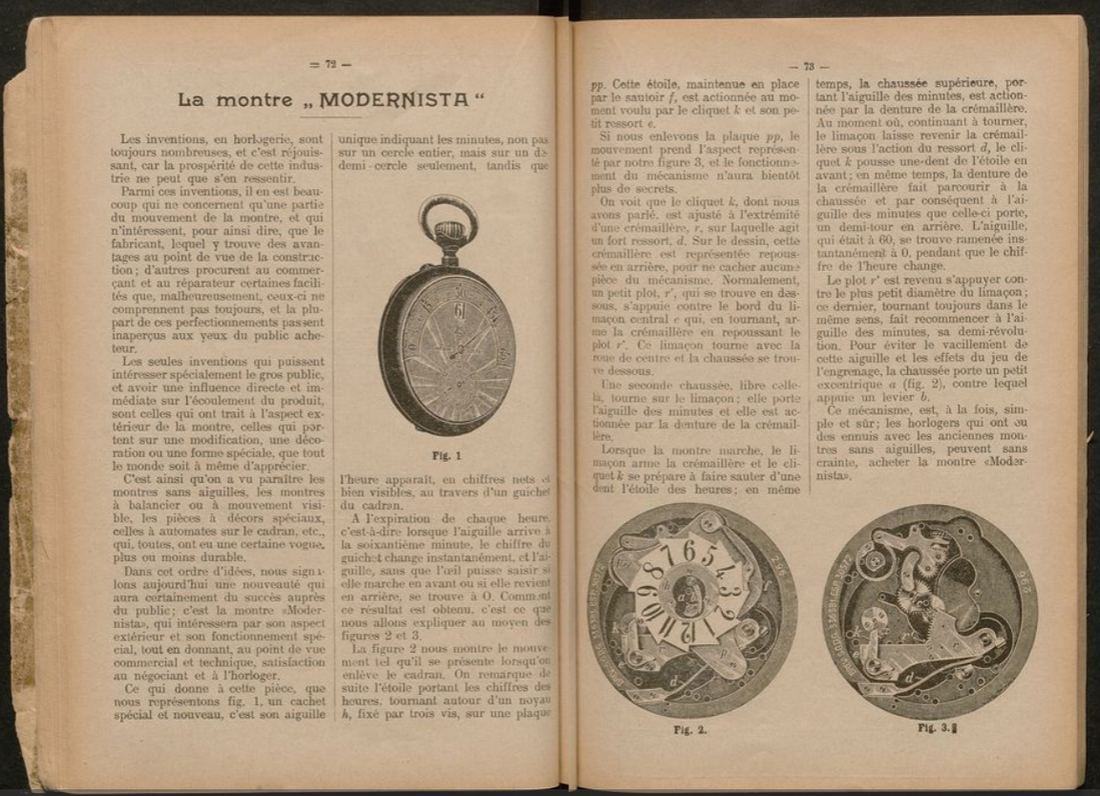
The hour appears in an aperture at twelve and changes in an instant; the minute hand sweeps an arc from seven to five and flies back. The mechanism was patented on 5 May 1903 by Gabriel López Mántaras of Saragossa and made under licence by Courvoisier Frères, who registered MODERNISTA on 26 December 1903 and presented the watch in the Almanach de l’horlogerie of 1905. Many dials were made for Cigarrillos Excelsior of Buenos Aires.

Sources · Brevet N° 27838 (1903) et addition /538 (1905) · Marque N° 16 713 · Almanach de l’horlogerie 1905, pp. 72–73

The Modernista display — drawn after the period advertisements.
Modernista pocket watch with silver engine-turned dial, jumping hour aperture and retrograde minutes
Modernista, c. 1905 · jumping hour at twelve
c. 1900 · Marks of 1904
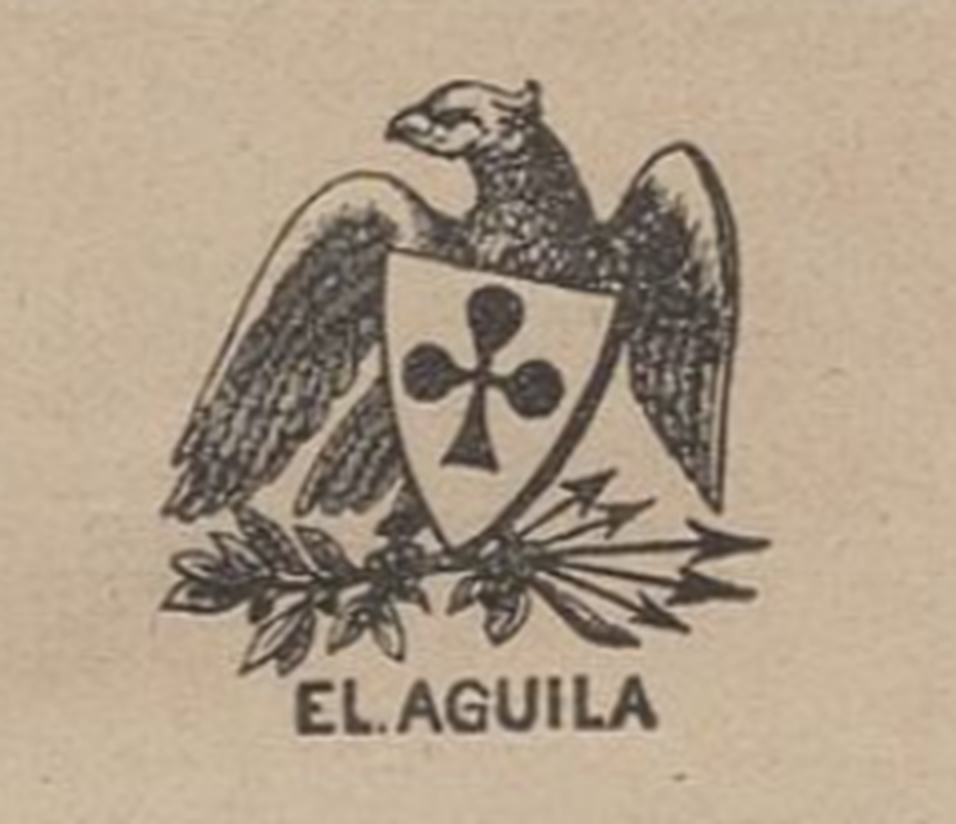
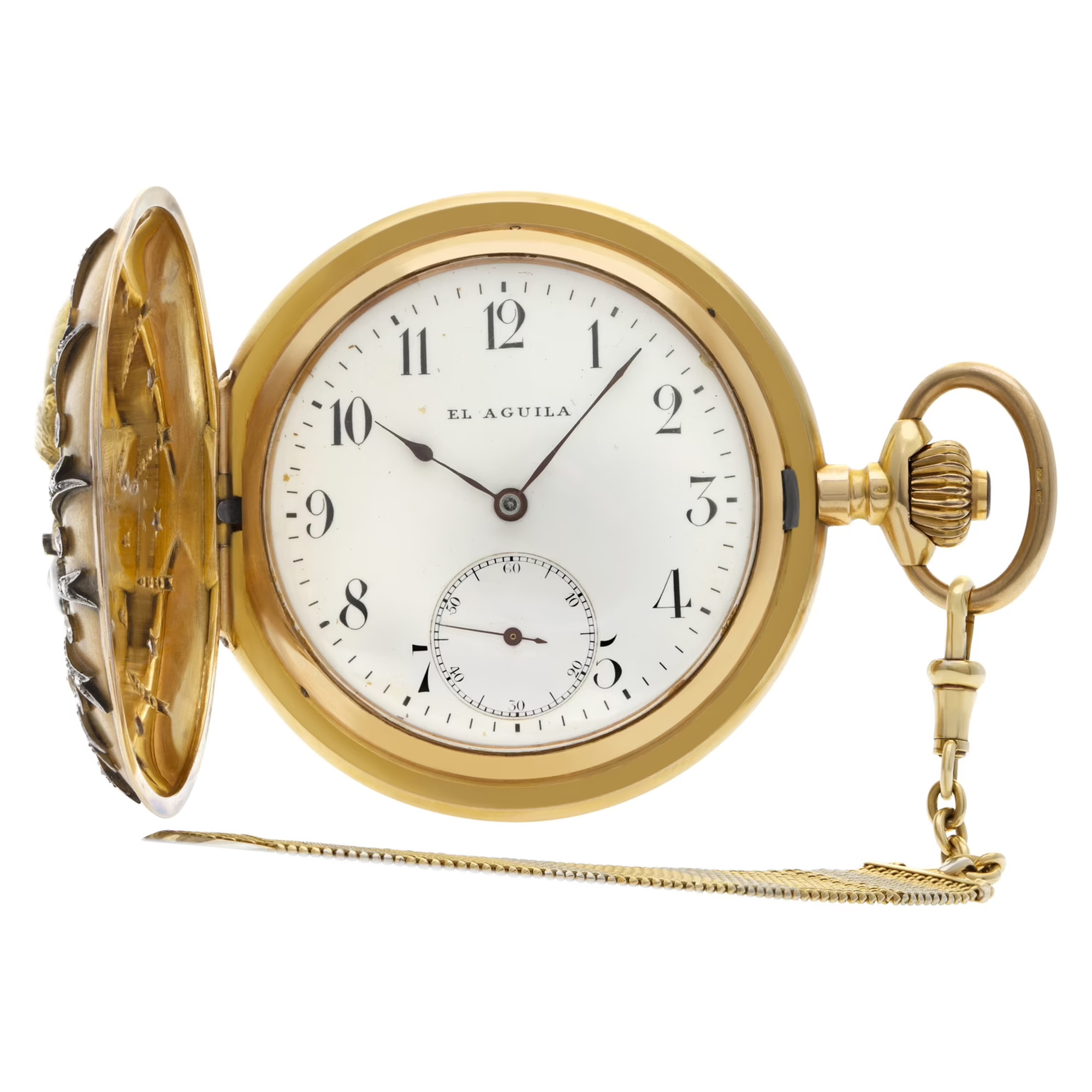
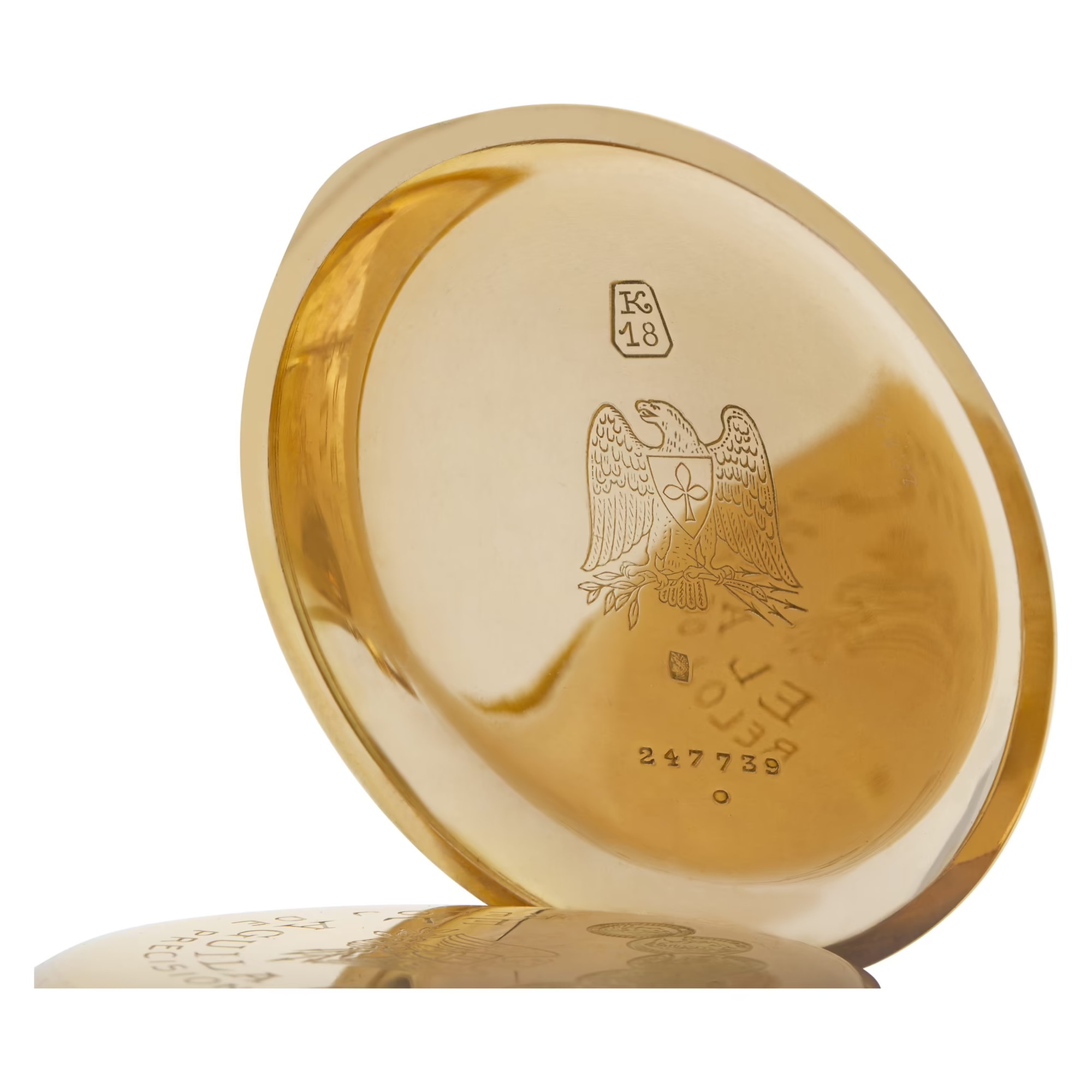
El AguilaThe eagle for the Iberian world

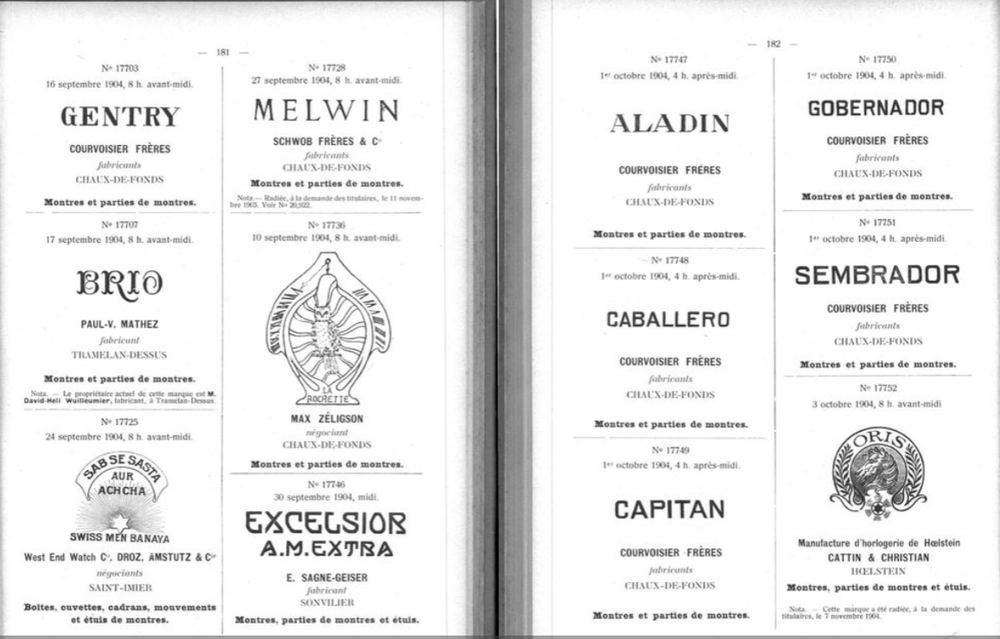
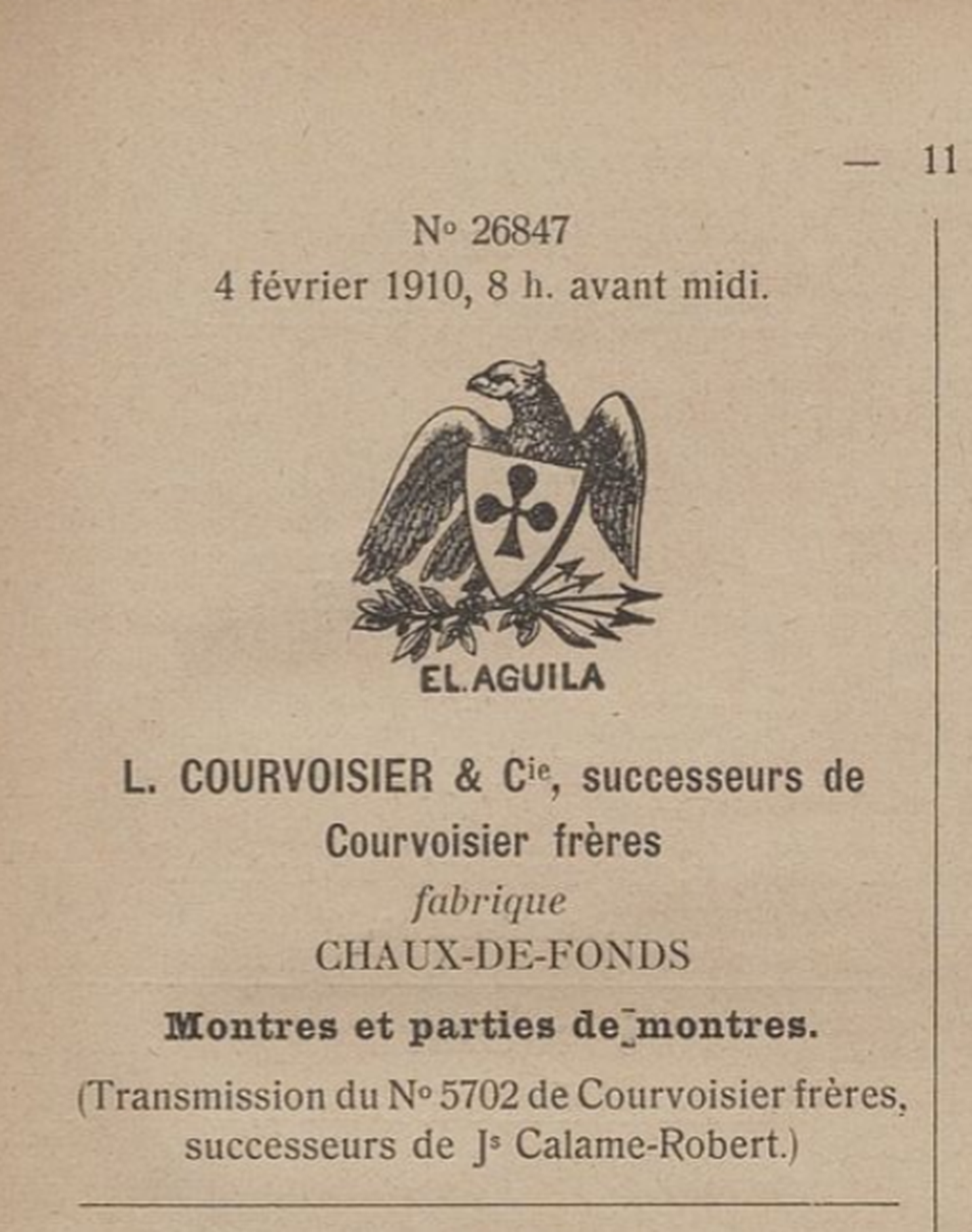
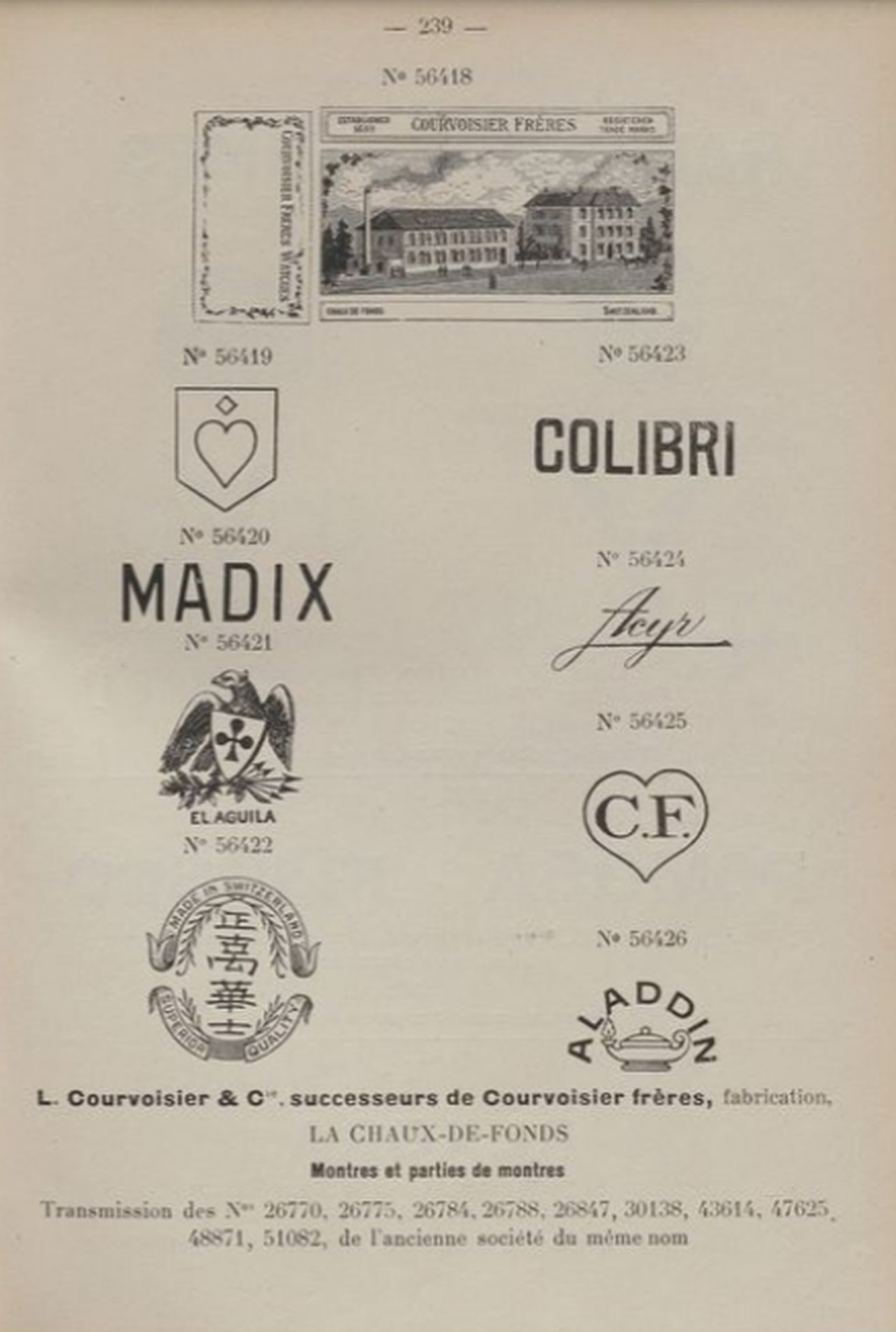
At the turn of the century Courvoisier Frères signed a family of watches for Spain, Portugal and South America, registering in 1904 the marks Gentry, Aladin, Caballero, Capitán, Gobernador and Sembrador beside the eagle. The Maison’s Madrid branch followed in 1910.

Sources · Archives de l’horlogerie, marques N° 17 723 – 17 752, September – October 1904 · La Suisse libérale, 7 January 1910

El Aguila mark: an eagle with spread wings holding a shield with a cross
El Aguila · the mark
Register pages listing the marks Gentry, Aladin, Caballero, Capitan, Gobernador and Sembrador
Marks of 1904 · Gentry, Aladin, Caballero, Capitán, Gobernador, Sembrador
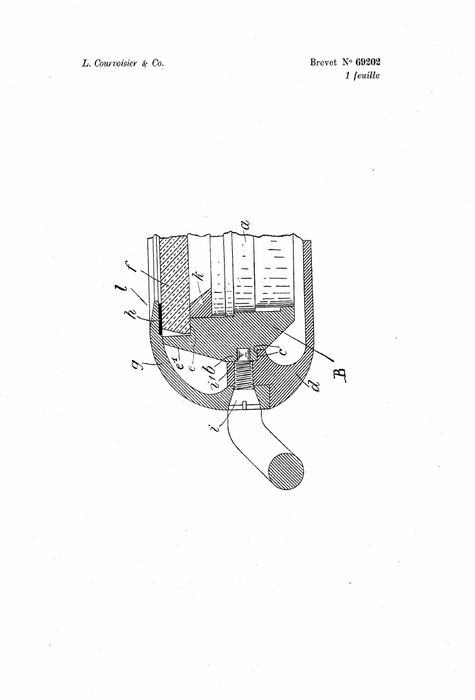
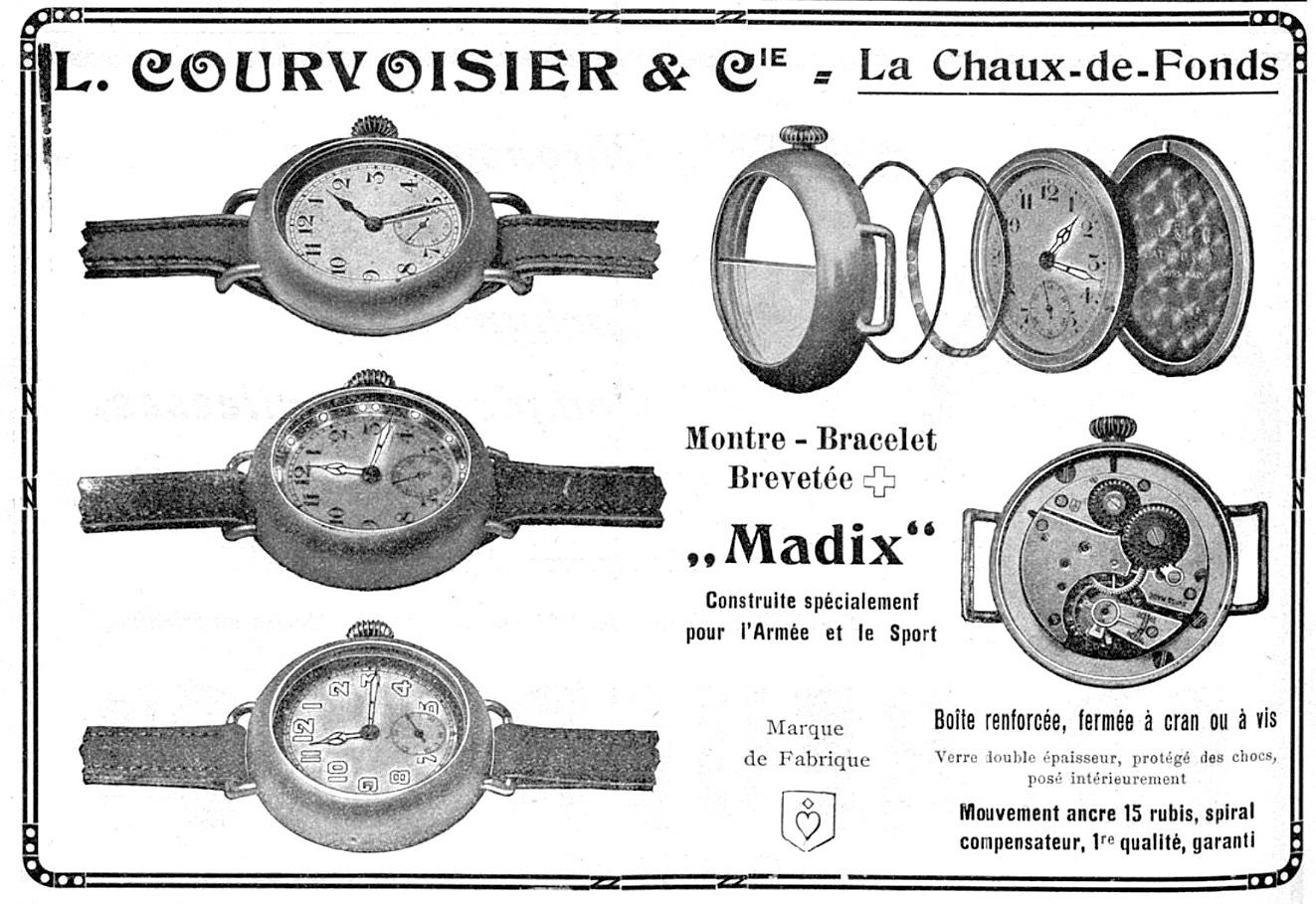
1914 – 1919 · Patent CH 69202 · The Madix mark
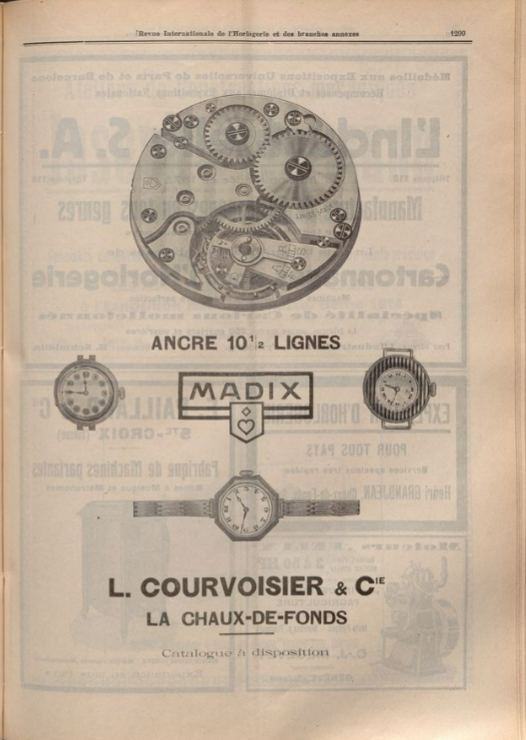
MadixLa montre à dix

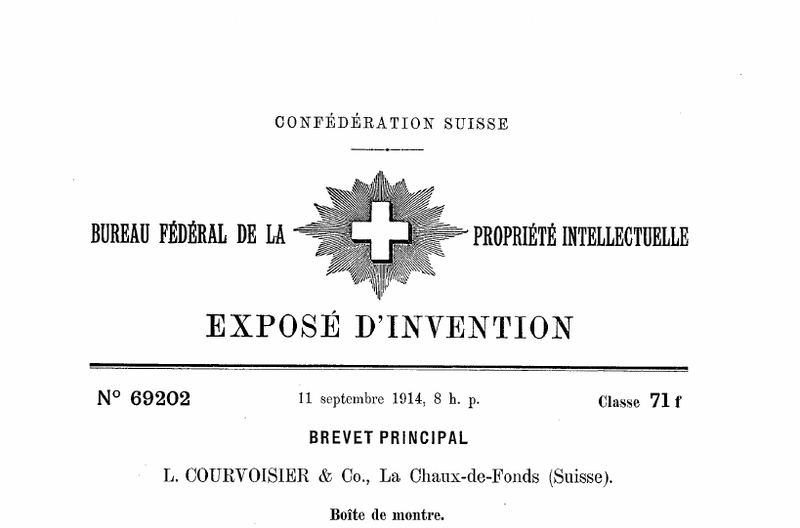
On 11 September 1914 L. Courvoisier & Cie, successors to Courvoisier Frères, patented a waterproof watch case; the 10½‑ligne MADIX movement followed, registered as a mark in 1919 and advertised for its solidity and the simplicity of its winding and setting — the officer’s wristwatch of the Maison.

Sources · Brevet principal N° 69202, 11 septembre 1914 · GB 1177/1915 · Revue internationale de l’horlogerie, 1913 · Inventions‑Revue, 1910

Advertisement: Ancre 10½ lignes, MADIX, L. Courvoisier & Cie, La Chaux-de-Fonds
Revue internationale de l’horlogerie, 1913 · “Ancre 10½ lignes Madix”
Patent drawing of a waterproof watch case in section, Swiss patent 69202
Patent CH 69202 · waterproof case, 1914

Métiers d’Art, Mobilis, Modernista, El Aguila and Madix are registered marks of the Maison for timepieces. New work is announced when it is ready, and not before; introductions are made by private appointment in Genève.

Request a conversation

Pièces maîtresses

What the Maison has made.

Objects that move between horology and enchantment: the documented record — museum catalogues, patent registers and the great auction rooms — describes a house that held records, opened mechanisms to a wider world, and painted empires in enamel.

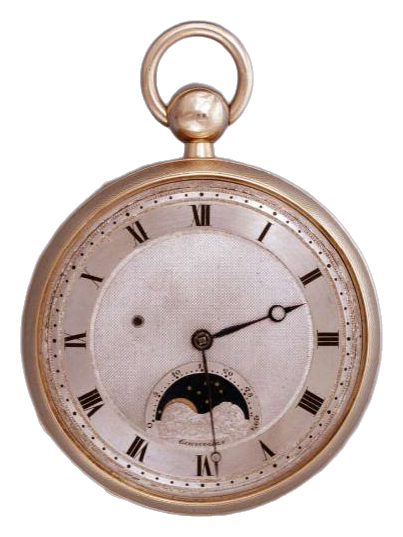
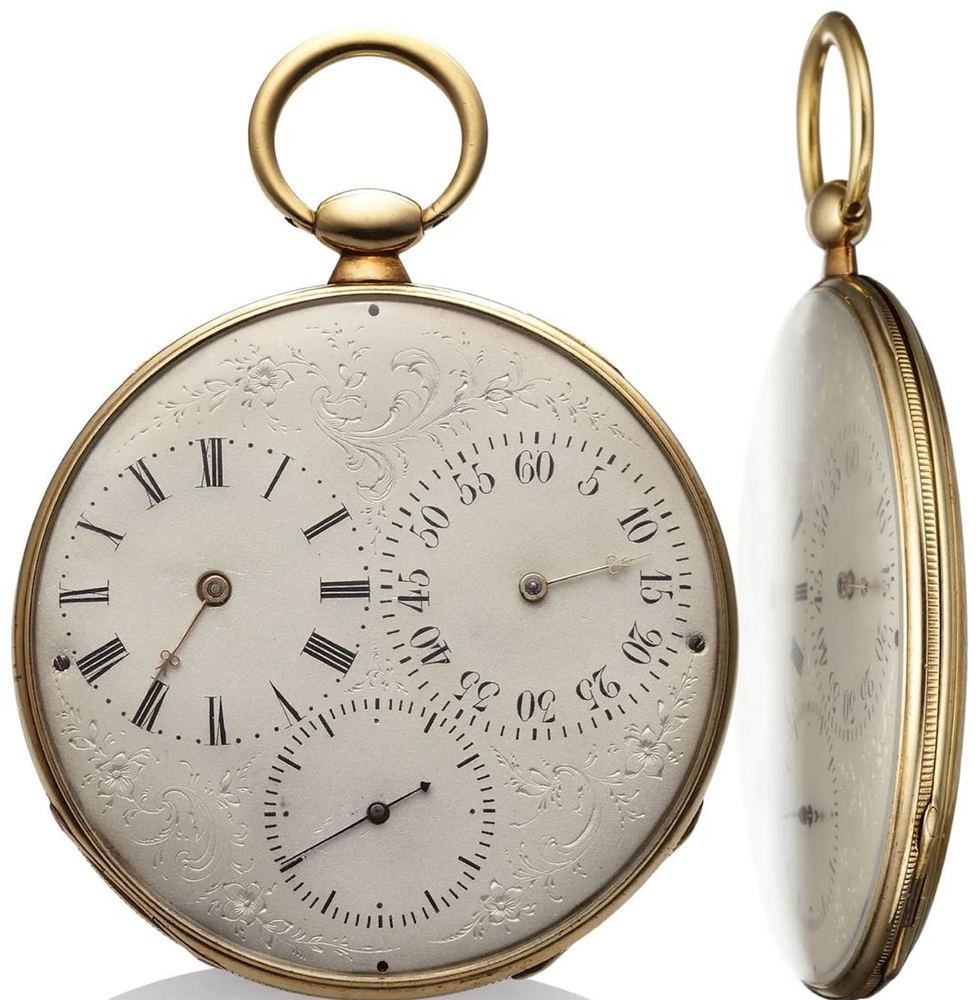
Ultra-thin gold pocket watch with engraved silvered dial, shown face-on and in profile
The flattest watch in the world, 1842Commissioned by the town of La Chaux‑de‑Fonds for King Friedrich Wilhelm IV of Prussia — Courvoisier Frères.
The profileDescribed at its creation as the thinnest pocket watch ever made; the tradition continued in the engraved regulator of 1849.
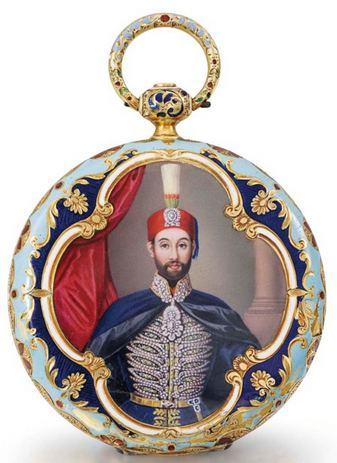
Gold and enamel pocket watch with a painted portrait of Sultan Abdülmecid I
Portrait watch of Sultan Abdülmecid I, c. 1850Auguste Courvoisier & Cie; enamel case made in Genève · sister pieces at Topkapı Palace and the L. A. Mayer Museum.
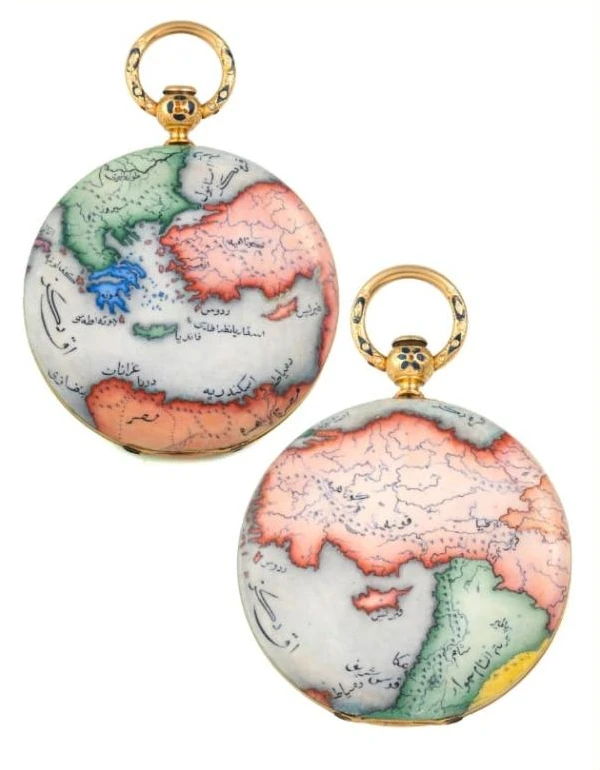
Gold and enamel hunting-cased watch by Courvoisier Frères, both covers painted with maps of the Ottoman Empire
“The Ottoman Empire”, map watch for the Turkish marketCourvoisier Frères · both covers painted in enamel with maps of the Empire — European Turkey on one side, Anatolia and the Levant on the other, place names in Ottoman Turkish.
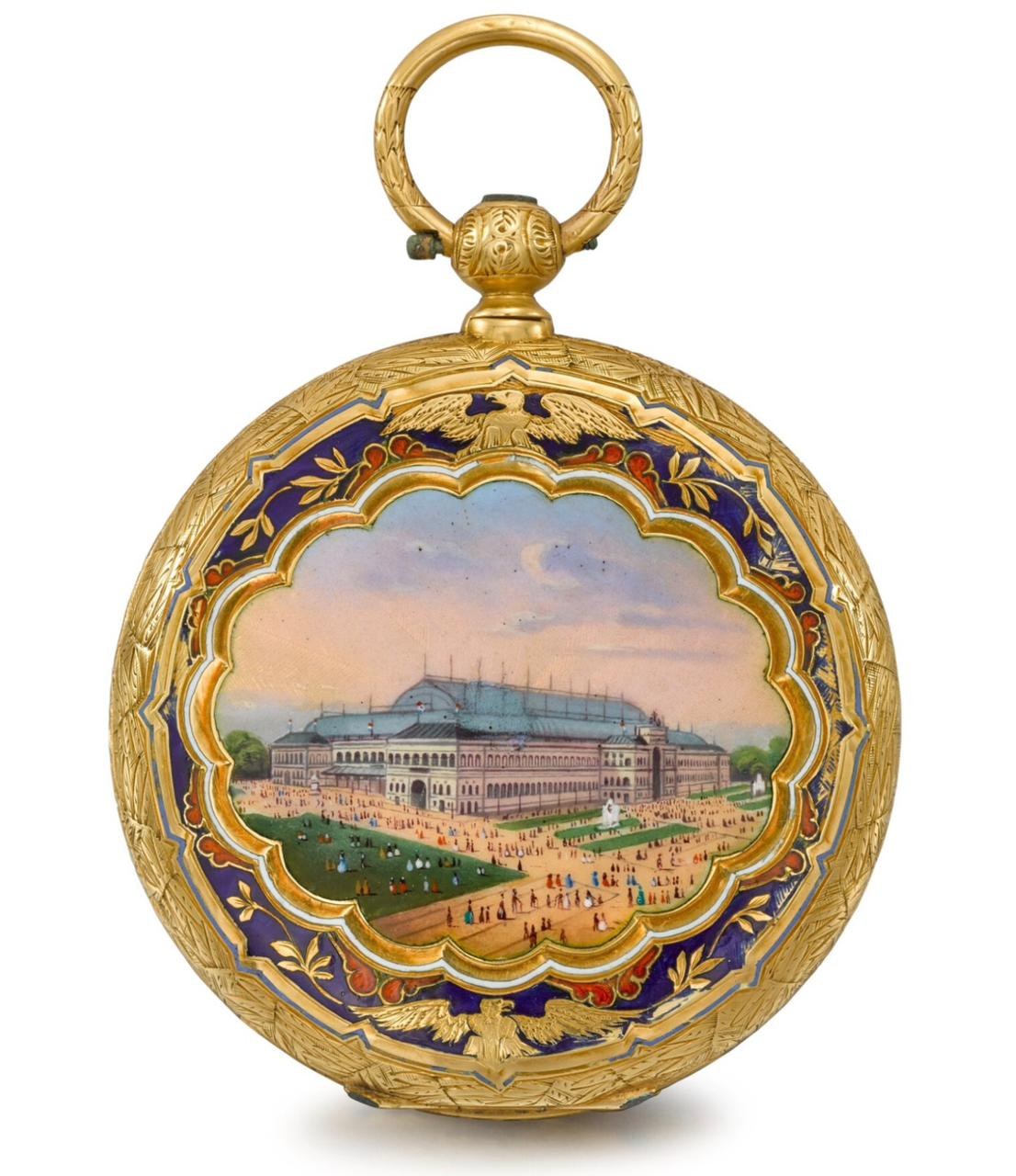
Gold pocket watch with an enamel painting of the Palais de l’Industrie
Enamel watch, the Palais de l’Industrie, c. 1855Presented under the Second Empire to an Ottoman dignitary; the Exposition Universelle of 1855 in polychrome enamel.
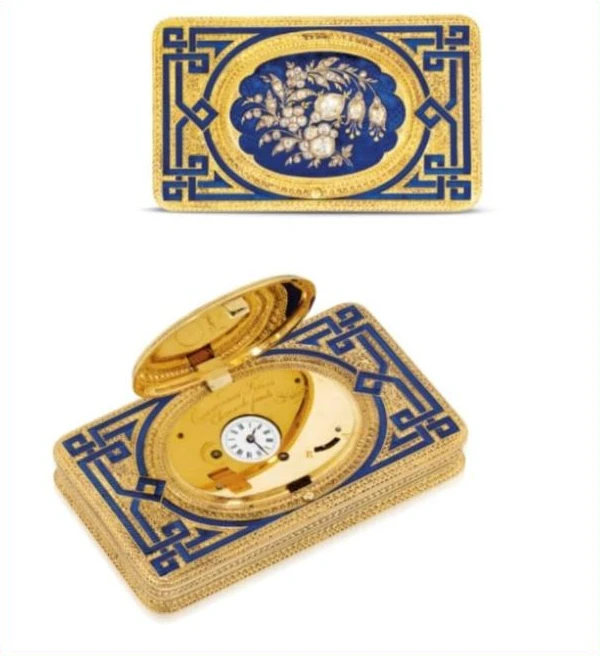
Gold, blue enamel and diamond-set snuff box by Courvoisier Frères, shown closed and open to reveal the concealed watch
Snuff box with concealed watch, c. 1850Courvoisier Frères, Chaux‑de‑Fonds · gold, enamel and diamonds, a key-wound cylinder watch within.
Gold pocket watch with an enamel scene of a garden pavilion and automaton figures
Automaton watch, Robert & Courvoisier, c. 1800Painted enamel with moving figures above the hour dial.
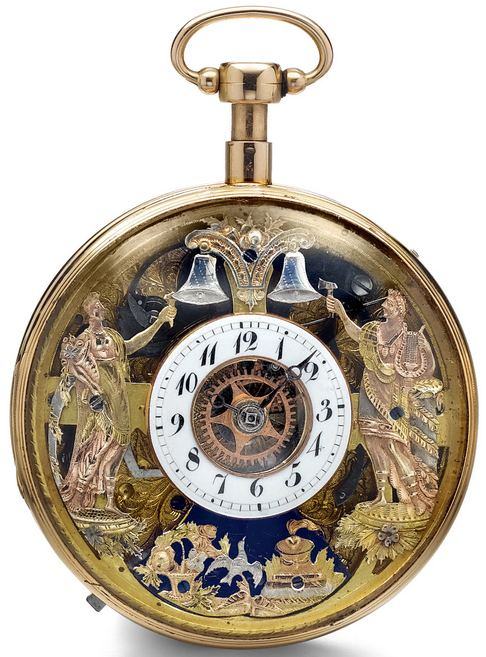
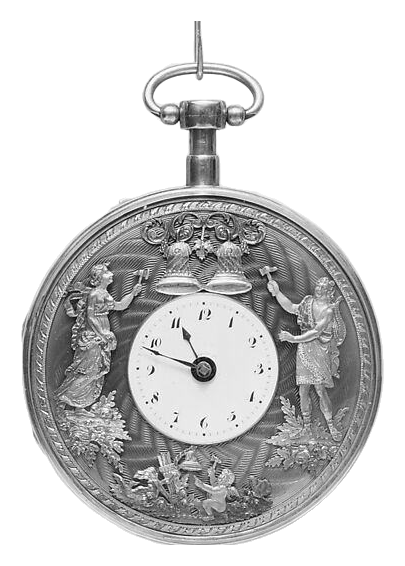
Gold pocket watch with visible movement and two gilt automaton figures striking bells
Jacquemart automaton watch, c. 1810Two figures strike the bells on the quarters.
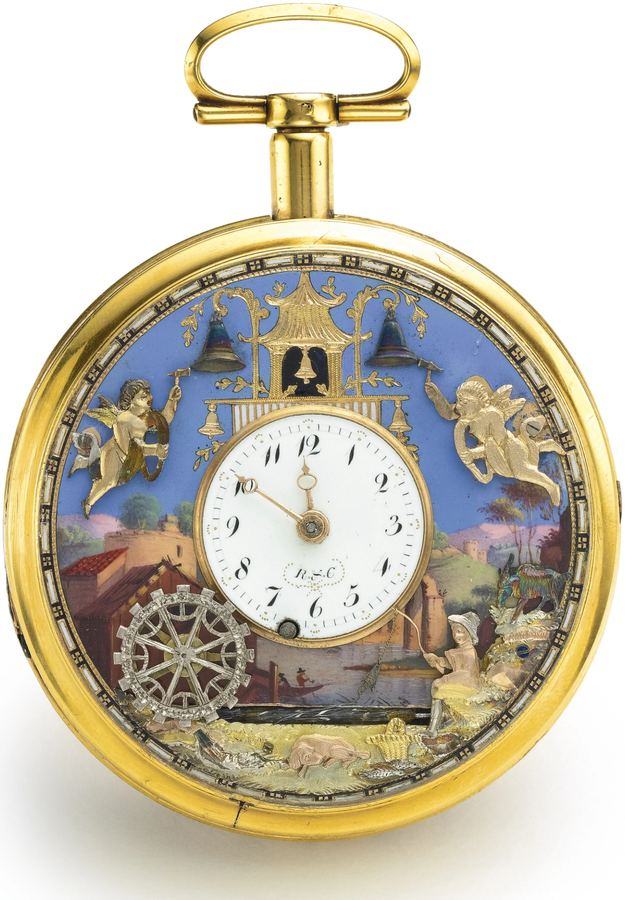
Gold pocket watch with an enamel and gold automaton scene of a fisherman at a mill
“The Fisherman”, automaton watch, c. 1810Courvoisier & Cie.
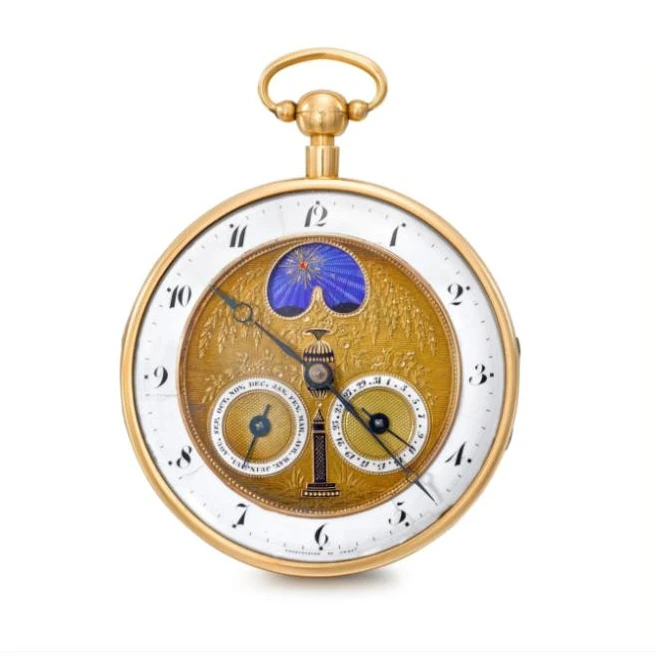
Gold pocket watch signed Courvoisier et Compe, engraved gold dial with an urn, obelisk and willow, month and date subsidiary dials and a blue enamel aperture
Calendar watch, engraved gold dialSigned Courvoisier et Compe on the dial · urn, obelisk and willow engraved in gold, month and date subsidiary dials, blue enamel aperture.
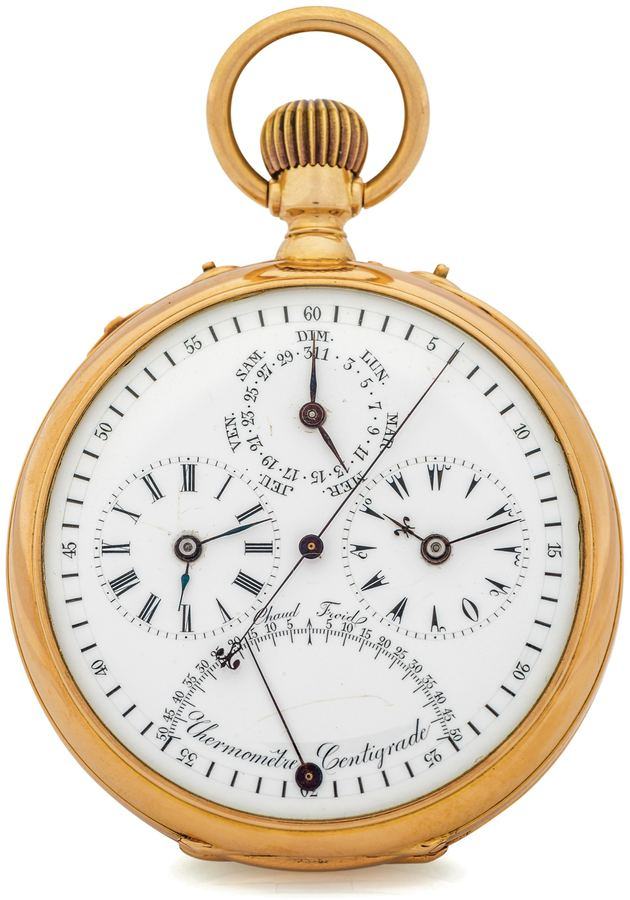
Gold pocket watch with white enamel dial showing two time zones and a centigrade thermometer
Two time zones and a centigrade thermometerCourvoisier Frères, La Chaux‑de‑Fonds · “Thermomètre centigrade” on the dial.
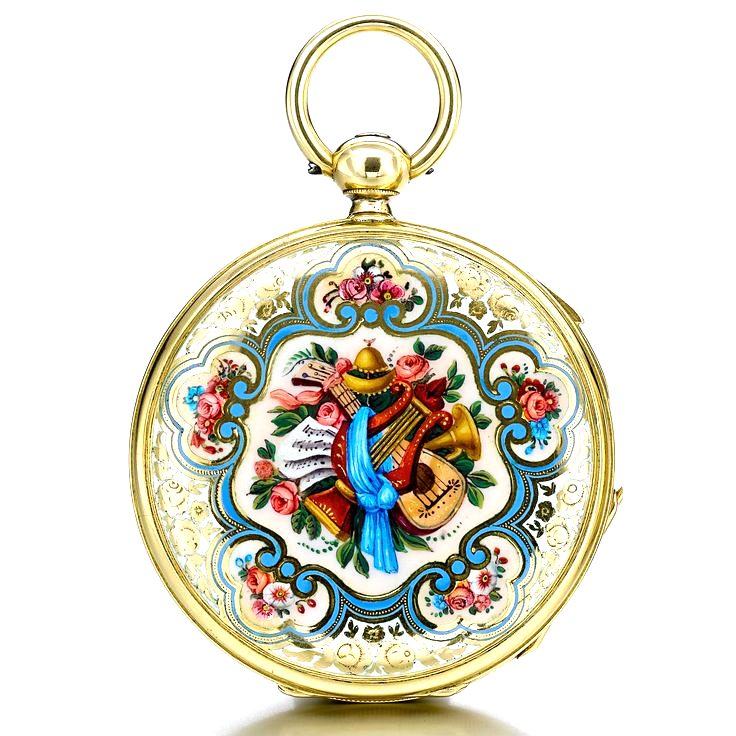
Gold pocket watch with a painted enamel back showing musical trophies among flowers
Gold and enamel watch, trophies of musicSigned Frédéric Courvoisier · painted enamel, gold.
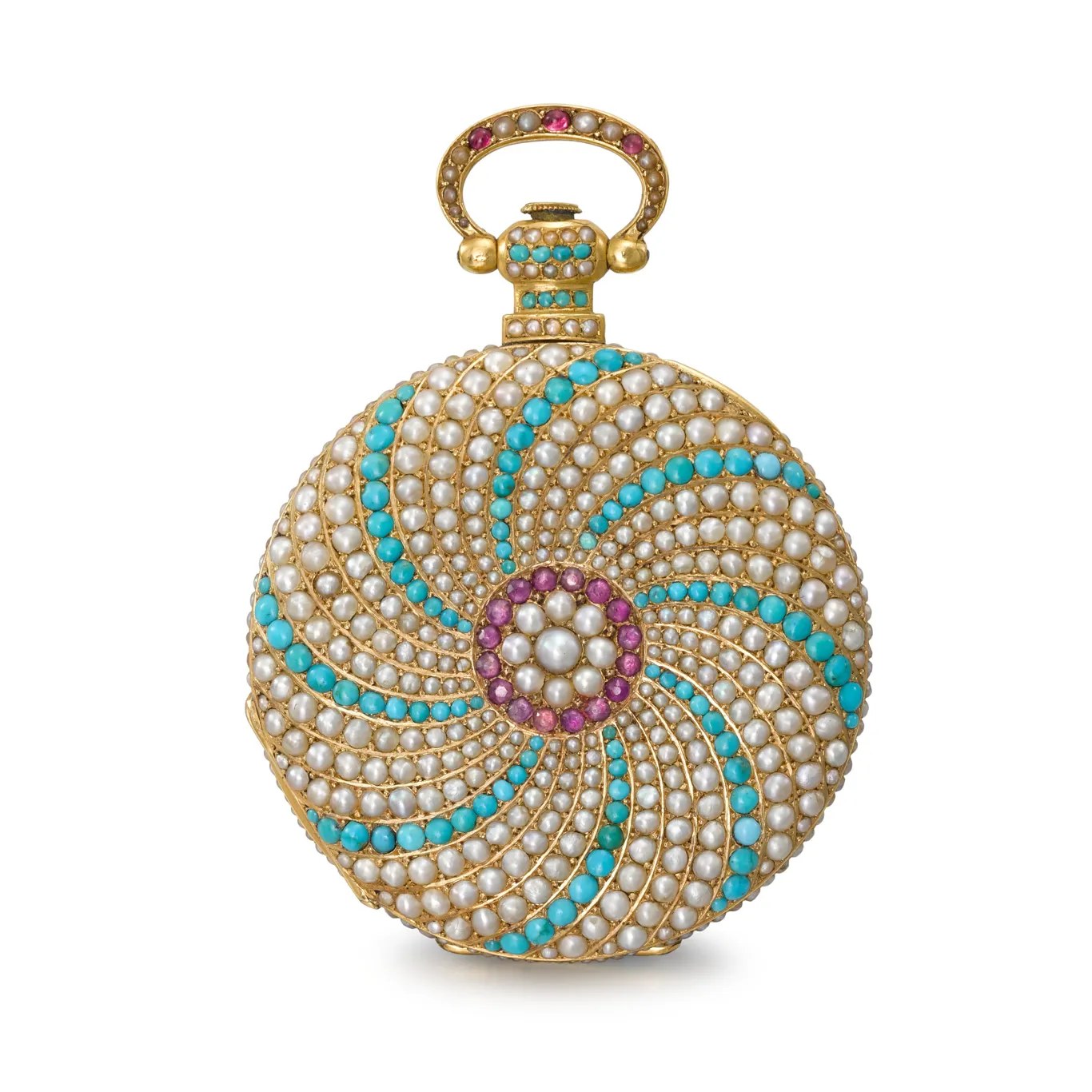
Two gold pocket watches with blue enamel and painted scenes, set with pearls
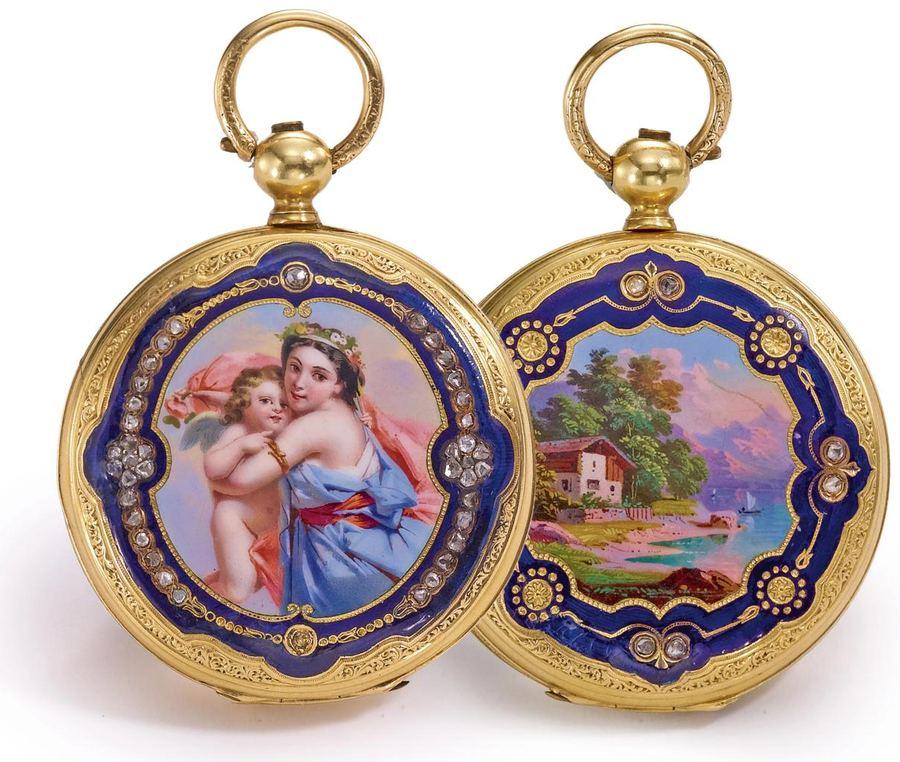
Enamel and pearl‑set watchesCourvoisier, mid‑19th century · painted enamel, seed pearls.
Gold pocket watch by Courvoisier Frères, white enamel dial set within painted enamel cartouches in rose, blue and white
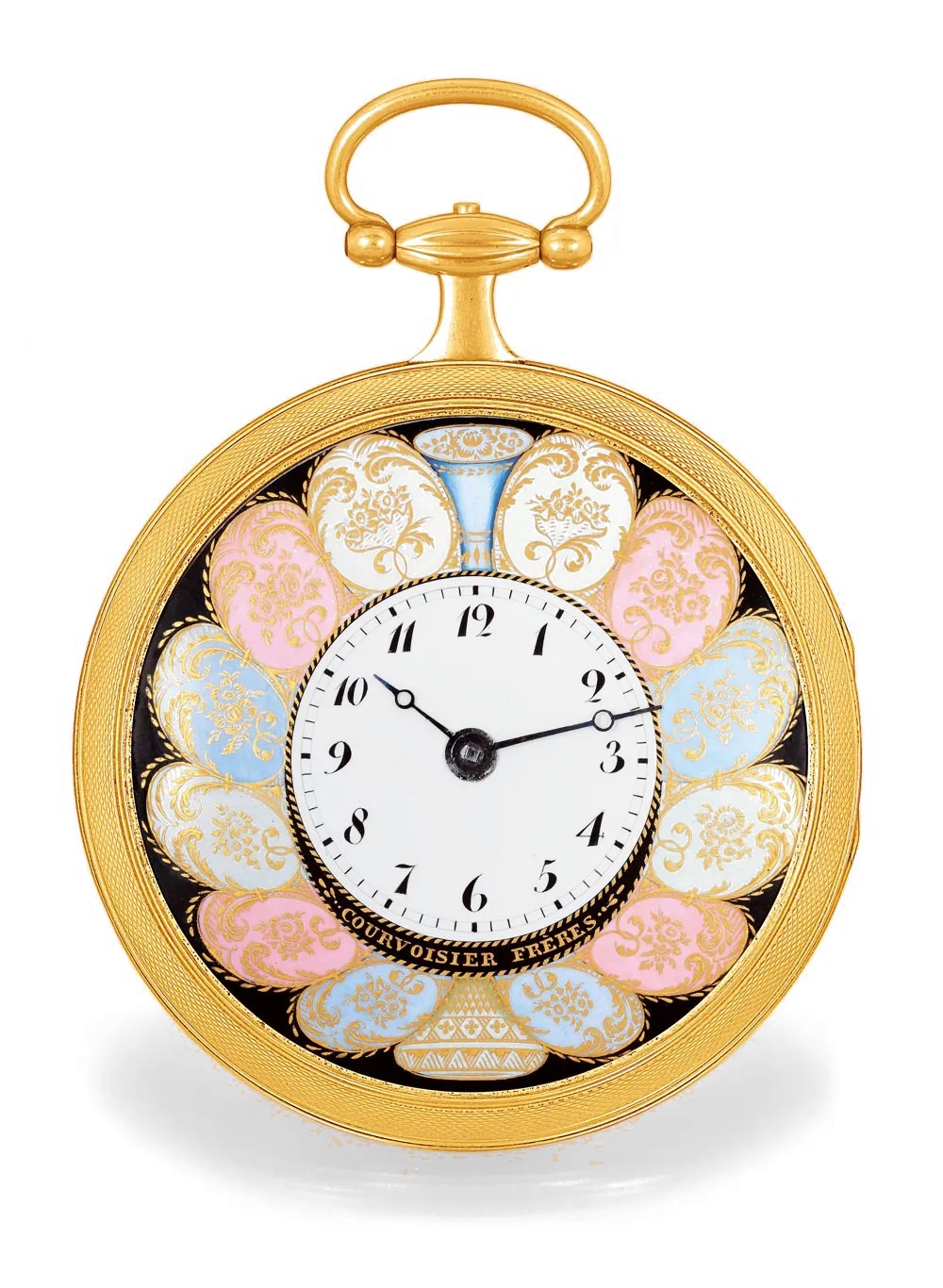
Cartouche dial in polychrome enamel, c. 1830Courvoisier Frères, La Chaux‑de‑Fonds · a white enamel centre within painted enamel cartouches heightened in gold, in an engine‑turned gold case.
Gold pocket watch with engraved foliage and enamel dots on the case
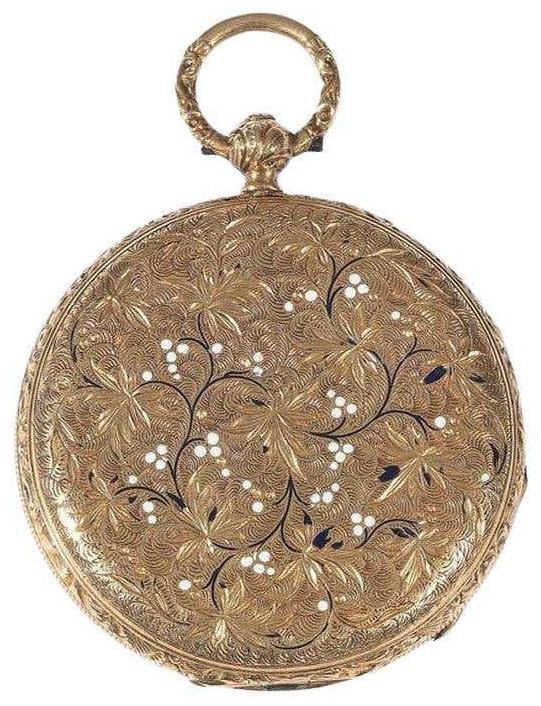
Courvoisier, Genève — engraved gold, key‑woundYellow gold, engraved and enamelled case, open face.
Gilt-bronze carriage clock with white enamel dials beside its leather travel case
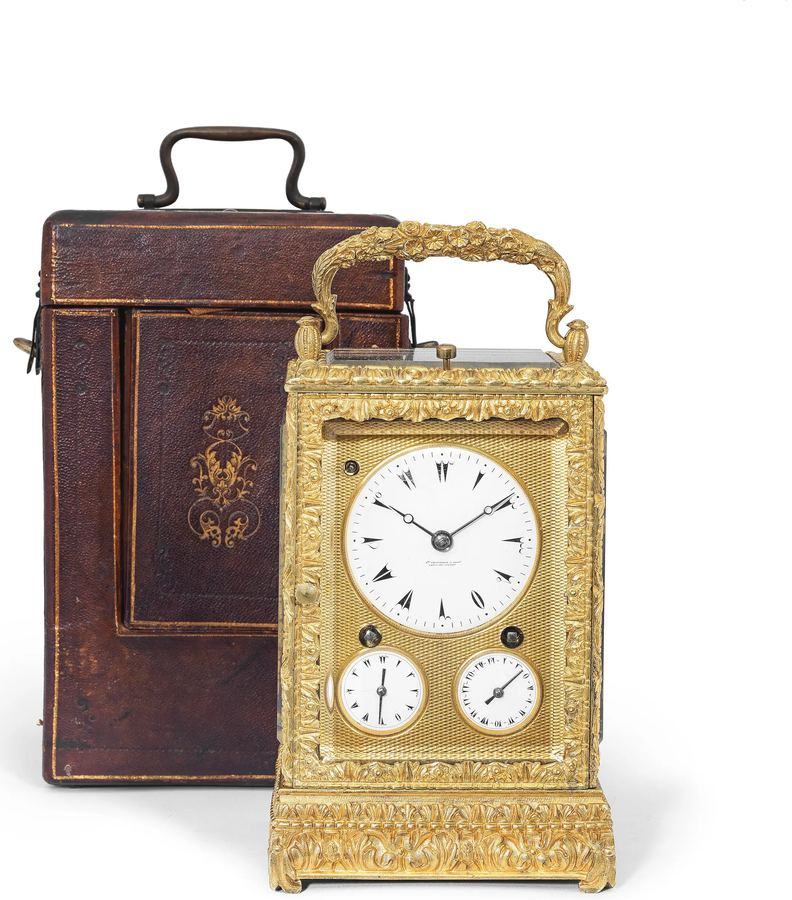
Pendule d’officier, grande sonnerieDay‑and‑night striking and calendar, with its travel case.
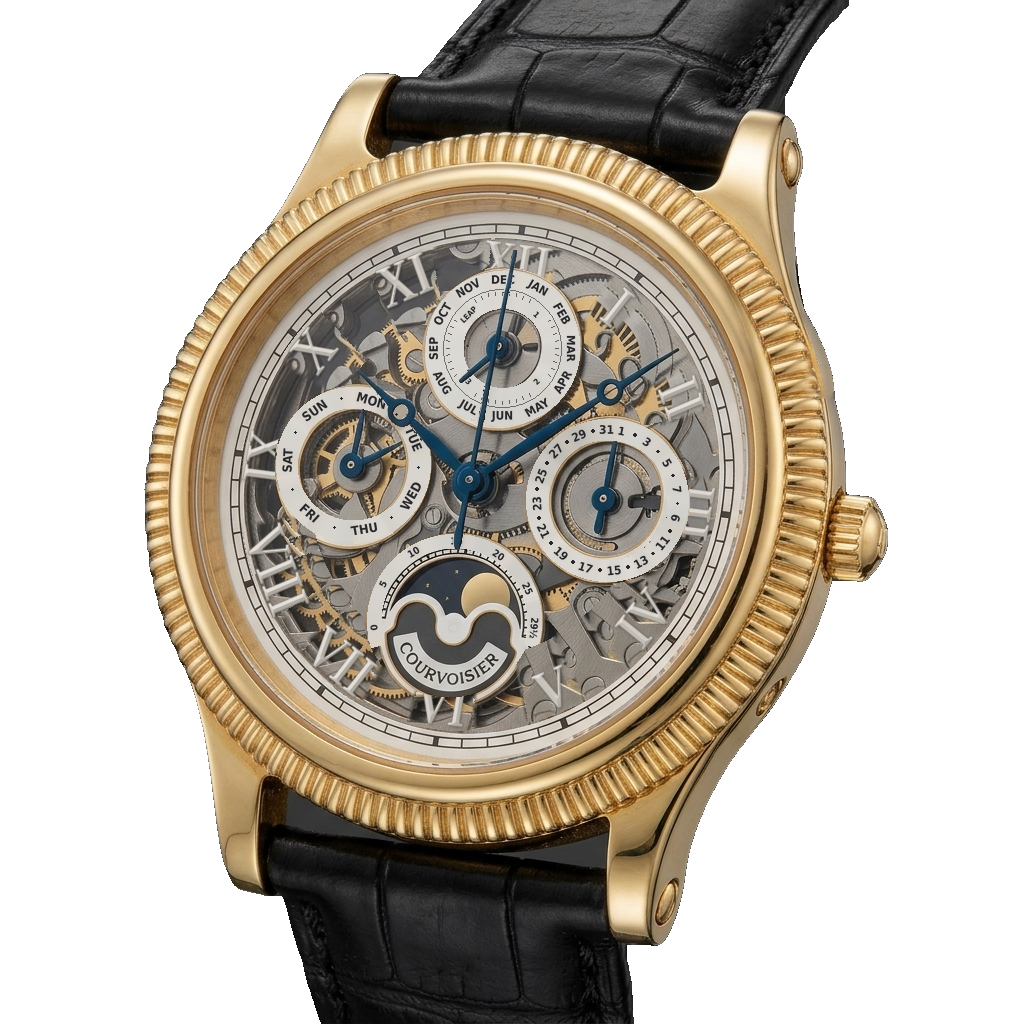
Gold wristwatch with skeletonised perpetual calendar movement visible through the dial
Courvoisier skeleton perpetual calendar, 1990sLa Chaux‑de‑Fonds.

The signature through the twentieth century

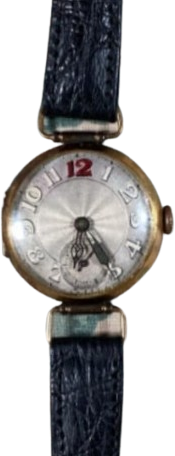
Small round wristwatch of the 1930s with an engine-turned silver dial and a red twelve, on a black strap
c. 1920Courvoisier Madix, engine‑turned silvered dial with a red twelve.
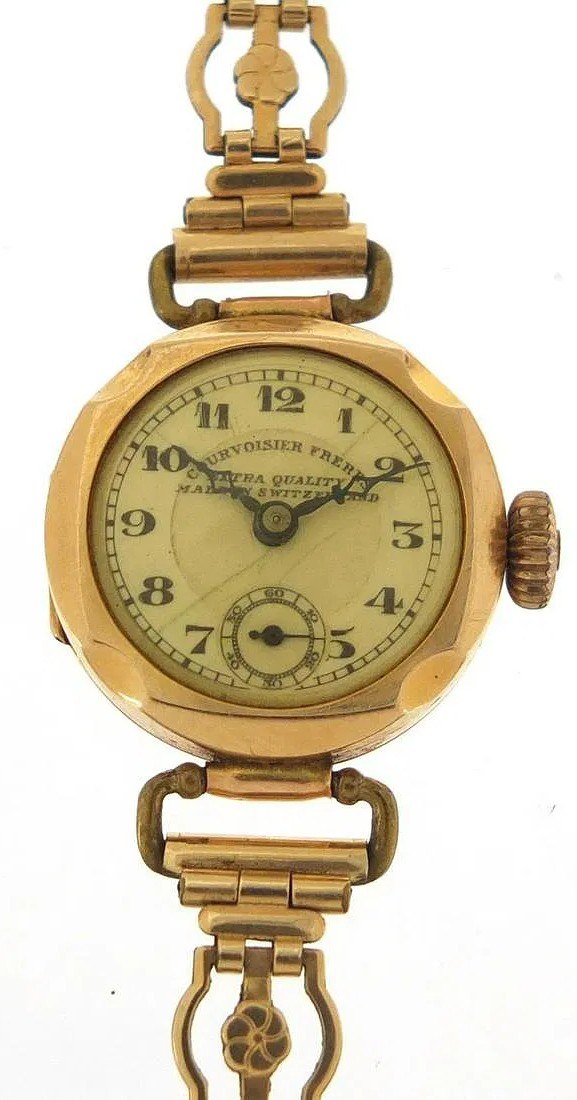
Ladies’ gold wristwatch on an expanding bracelet, dial signed Courvoisier Frères, Extra Quality, Made in Switzerland
Courvoisier Frères, 1920sLadies’ wristwatch in gold on an expanding bracelet; “Extra Quality — Made in Switzerland” on the dial.
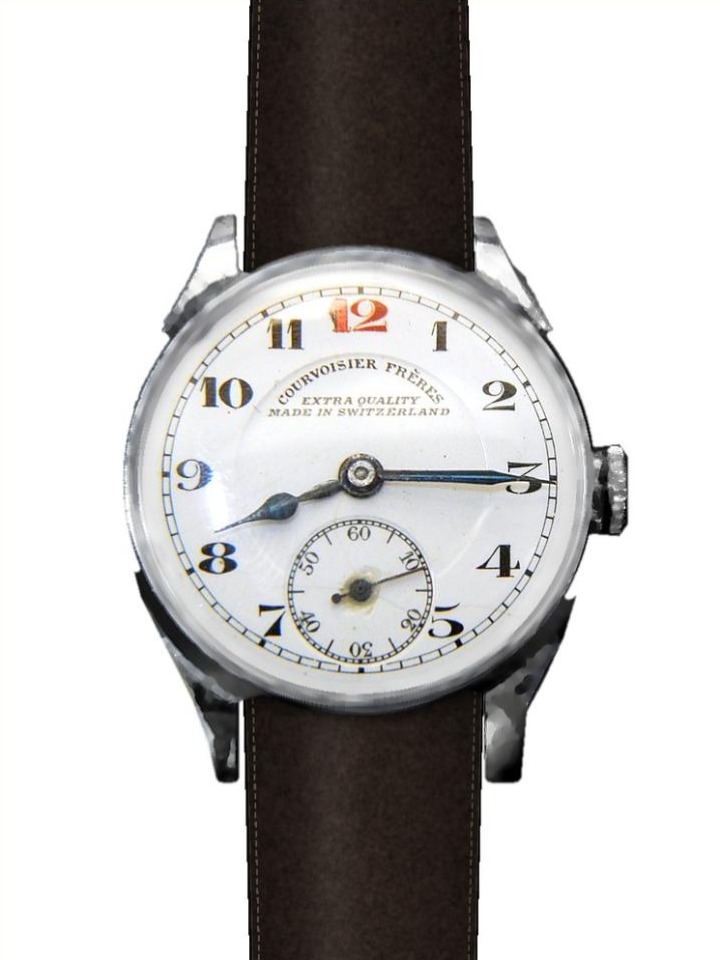
Courvoisier Frères wristwatch with a white dial, red twelve and small seconds, on a dark brown leather strap
Courvoisier Frères, 1920sWristwatch, white dial with a red twelve and small seconds.
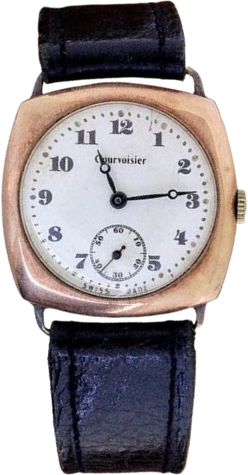
Cushion-shaped rose gold wristwatch of the 1950s with white dial and Arabic numerals, signed Courvoisier, on a black strap
1950sCourvoisier watch, cushion model.
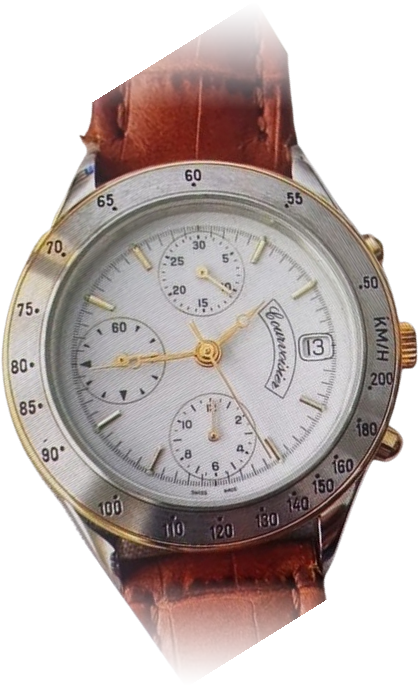
Two-tone chronograph wristwatch of the 1980s with tachymeter bezel, three registers and date, signed Courvoisier
1980sCourvoisier chronograph, two‑tone case, tachymeter bezel, date at three.
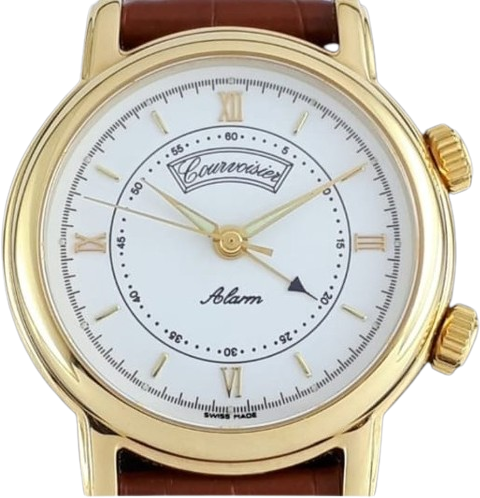
Gold alarm wristwatch of the 1990s with a white dial and Roman numerals, signed Courvoisier
1990sCourvoisier alarm wristwatch, gold, Roman numerals.
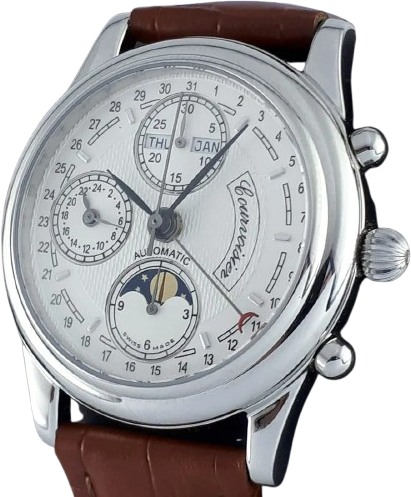
Steel automatic wristwatch with day, month, 24-hour indication and moon phase, signed Courvoisier
2015Courvoisier automatic calendar with moon phase, steel.

Provenance

Kept by the world’s museums.

A Maison is judged by where its pieces end up. These are the institutions that keep Courvoisier timepieces in their permanent collections, with the inventory numbers under which they are catalogued.

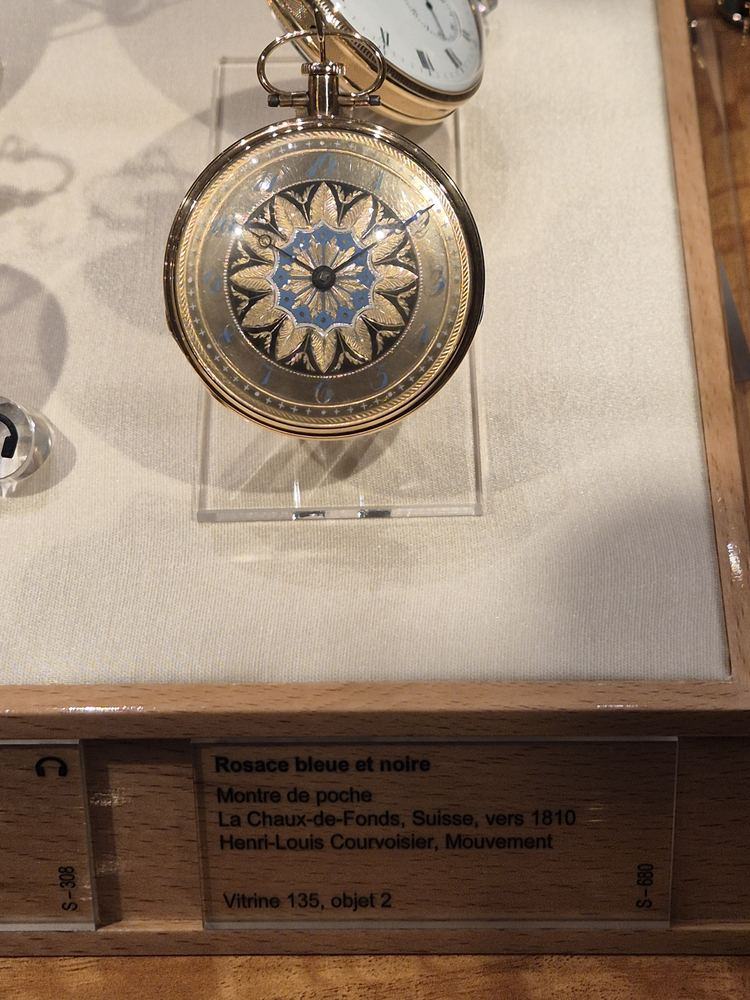
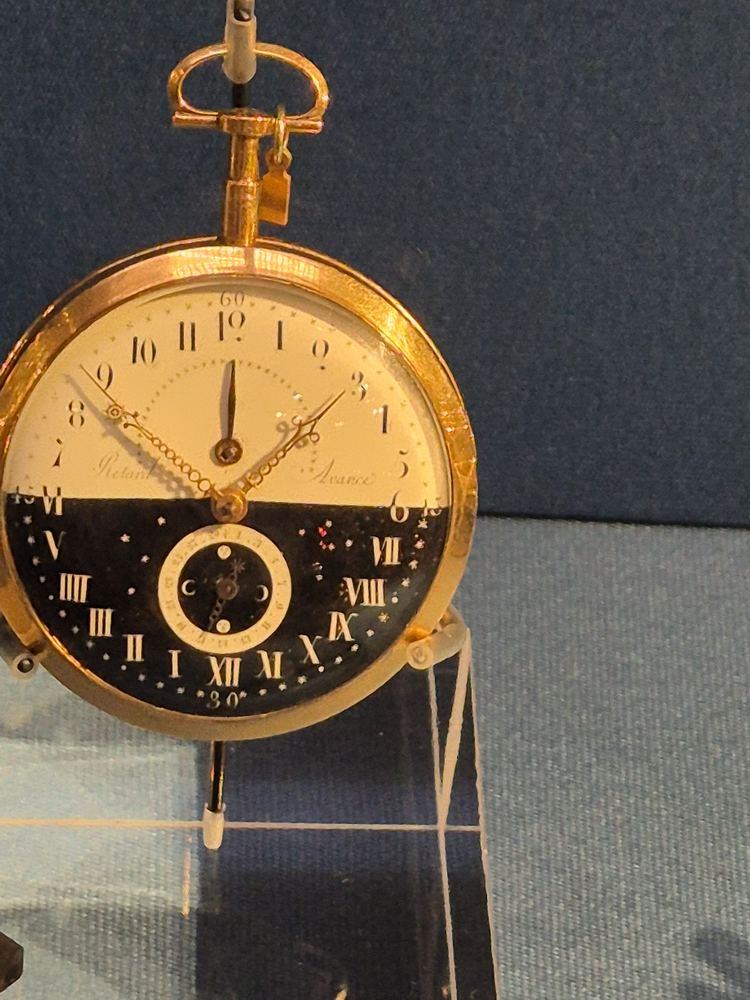
Museum vitrine with a gold pocket watch with a blue and black rosette dial and its label
Patek Philippe
Museum

Patek Philippe Museum, Genève

“Rosace bleue et noire” — pocket watch, La Chaux‑de‑Fonds, c. 1810; movement by Henri‑Louis Courvoisier.

Vitrine 135, objet 2 · photographed May 2026
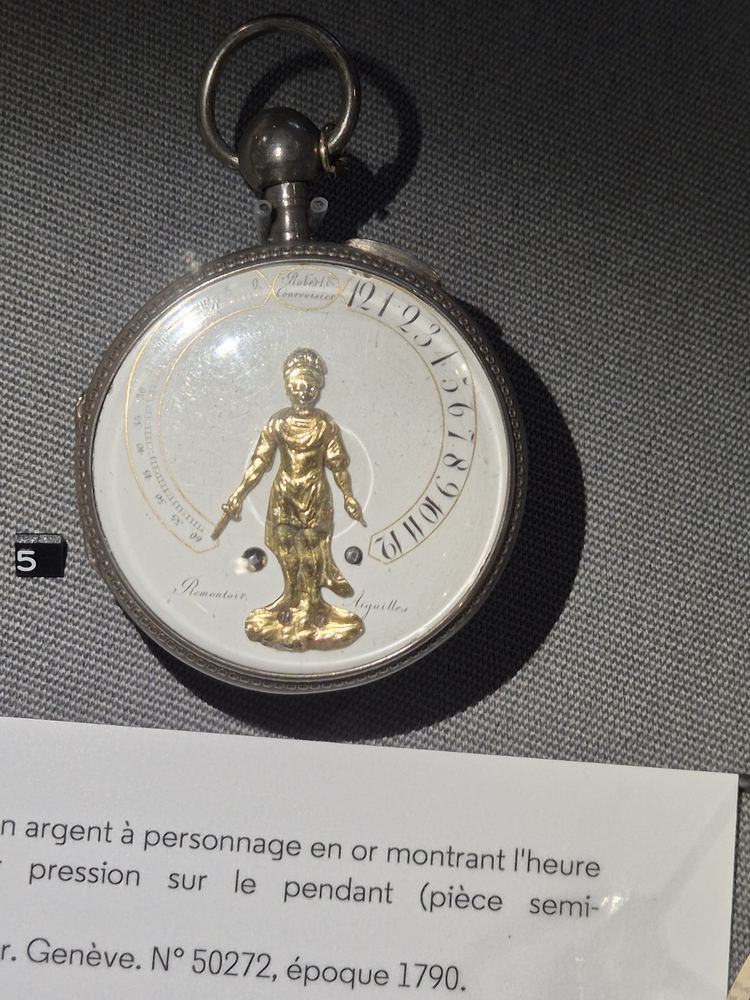
Silver pocket watch with a gold figure indicating the hour, in a museum vitrine
Musée international d’horlogerie

Musée international d’horlogerie, La Chaux‑de‑Fonds

Thirteen pieces, among them the silver watch with a gold figure that points the hour — Robert & Courvoisier, Genève N° 50272, c. 1790 — and the dance‑card watch repatriated with State funds in 2019.

Inv. I‑159 · Inv. IV‑109
Black and white museum photograph of a silver watch with figures around the dial
The Metropolitan Museum of Art

The Metropolitan Museum of Art, New York

Repeating watch, Courvoisier. Bequest of George A. Hearn, 1917.

Accession 17.101.48
Gold pocket watch with engine-turned dial and moon phase, British Museum photograph
The British Museum

The British Museum, London

Gold cylinder clock‑watch, 1810–20, quarter‑striking and playing two tunes; a Mobilis tourbillon of 1905. The museum records the firm as active from 1770 into the 1930s.

1958,1201.1123 and others
Gilt travel clock with a white enamel dial and a black day-and-night dial
Musée international d’horlogerie

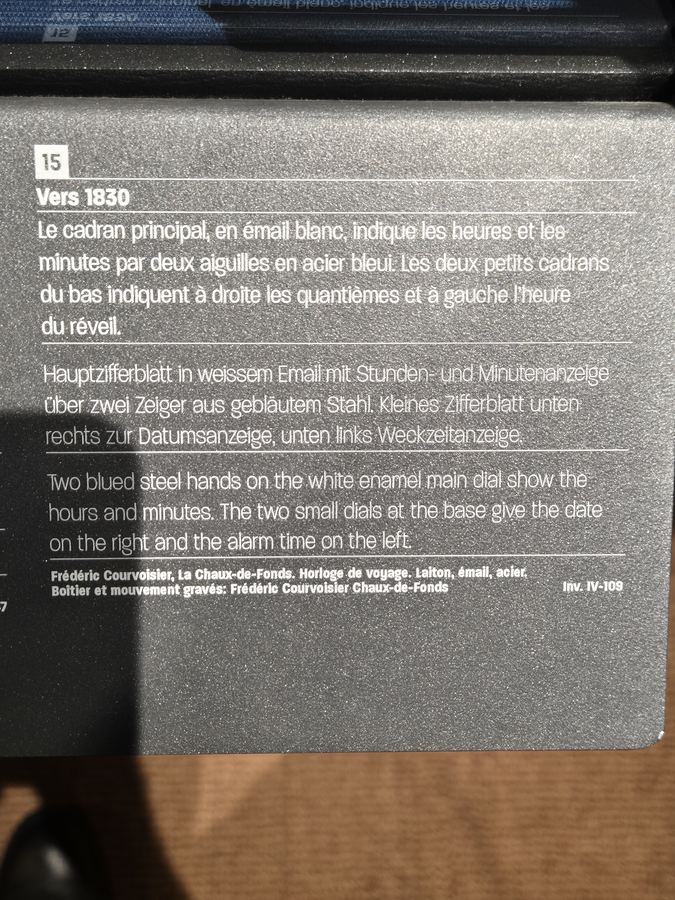
Travel clock of Frédéric Courvoisier, c. 1830

Brass, enamel, steel. Case and movement engraved “Frédéric Courvoisier, Chaux‑de‑Fonds”; the two small dials give the date and the alarm.

MIH inv. IV‑109
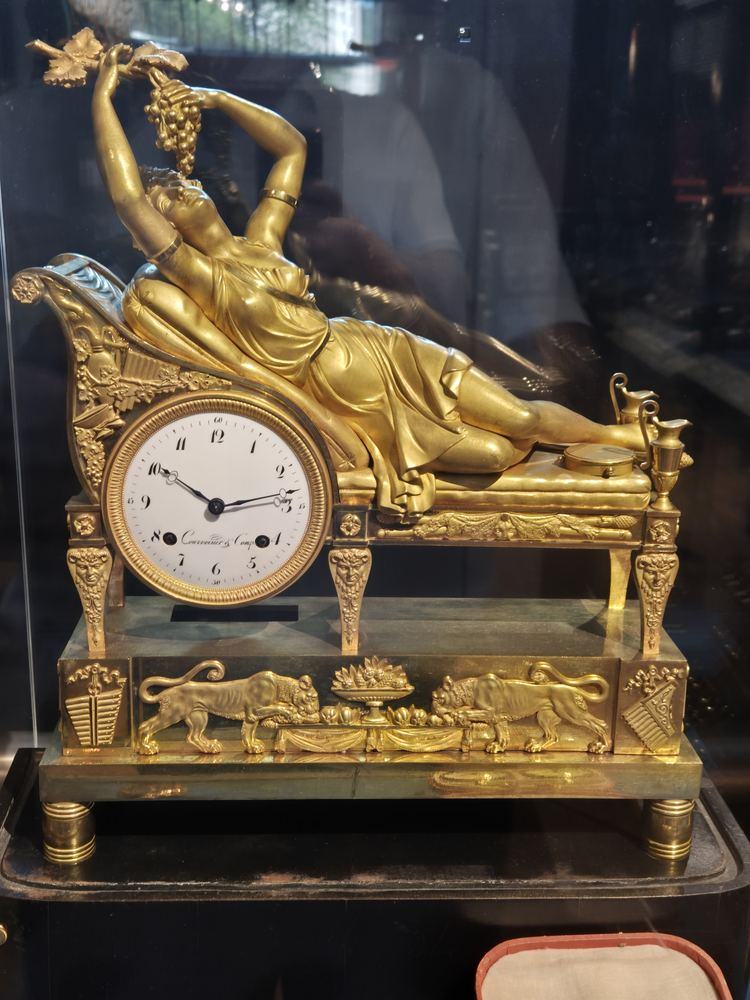
Gilt-bronze figural clock with a reclining figure above a white enamel dial signed Courvoisier
Musée international d’horlogerie

Pendule, dial signed Courvoisier & Comp.

Gilt bronze, the dial signed by the Maison; in the horological collections of La Chaux‑de‑Fonds.

Musée international d’horlogerie
Enamel portrait watch of Sultan Abdülmecid I
Topkapı Palace MuseumThe Museum for Islamic Art, Jerusalem

Topkapı Palace Museum, Istanbul · L. A. Mayer Museum, Jerusalem

The portrait watches of Sultan Abdülmecid I, signed Auguste Courvoisier & Cie. Courvoisier Frères and Courvoisier & Cie of La Chaux‑de‑Fonds supplied the Ottoman Palace; “Courvoisier à Paris” signatures date from the 1780s.

TSM 53/184 · EW 5‑70 · Topkapı Sarayı’nı Anlatmak, 2018, p. 306
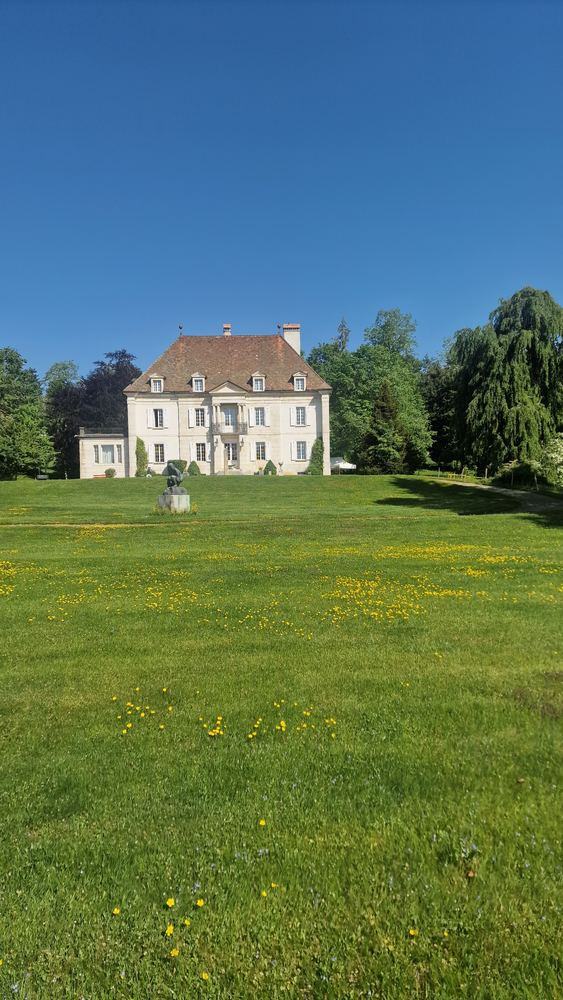
Château des Monts, an eighteenth-century manor in a park, seat of the Musée d’horlogerie du Locle
Musée d’horlogerie du Locle, Château des Monts

Musée d’horlogerie du Locle, Château des Monts · Musée d’art et d’histoire, Genève

Further pieces by the Maison are kept in the Neuchâtel mountains, cradle of the family, and in Genève.

Le Locle · Genève

Correspondents

Commissioned by the courts of Europe — read across four continents.

The Prussian connection began with the royal patent of 1725 and was renewed with the flattest watch of 1842. The Ottoman connection produced the Sultan’s portrait watches and the enamel of the Second Empire. Fritz Courvoisier’s journeys of the 1830s are recorded with the Maison’s correspondents among the merchant houses of St Petersburg and Moscow; the marks of 1904 and the Madrid branch of 1910 carried the signature to Spain, Portugal and South America.

The Maison’s correspondents, drawn from the documented record.
Salerooms Christie’s Geneva & LondonSotheby’s Hong KongAntiquorum GenevaDr. CrottAguttesNagel

Archives

Every claim, its document.

The Maison’s history is written in registers, patents and gazettes rather than in brochures. A selection from the archive, reproduced as found.

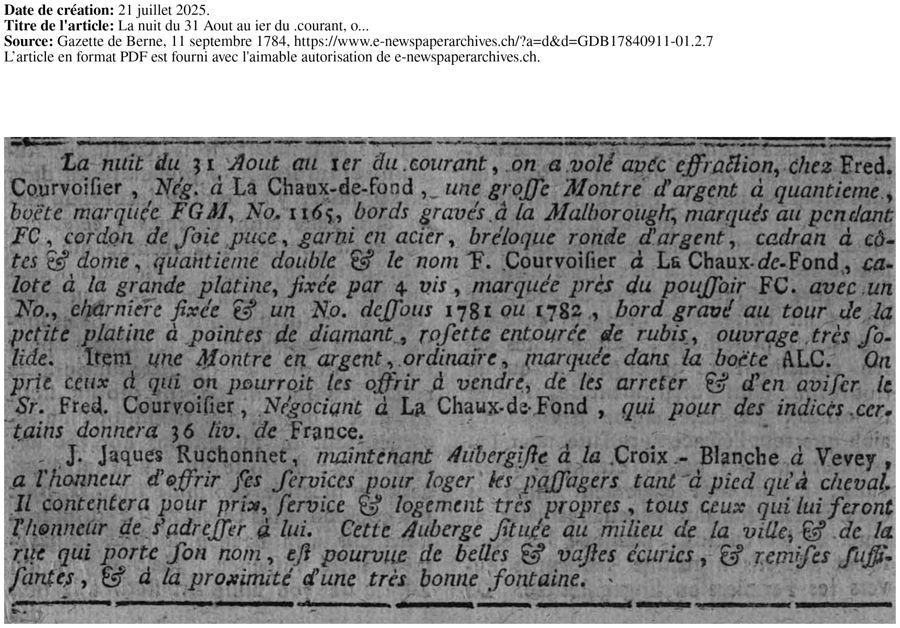
Gazette de Berne, 11 September 1784, notice naming Fred. Courvoisier, négociant à La Chaux-de-Fonds
Gazette de Berne, 11 September 1784Notice naming Fred. Courvoisier, négociant à La Chaux‑de‑Fonds.
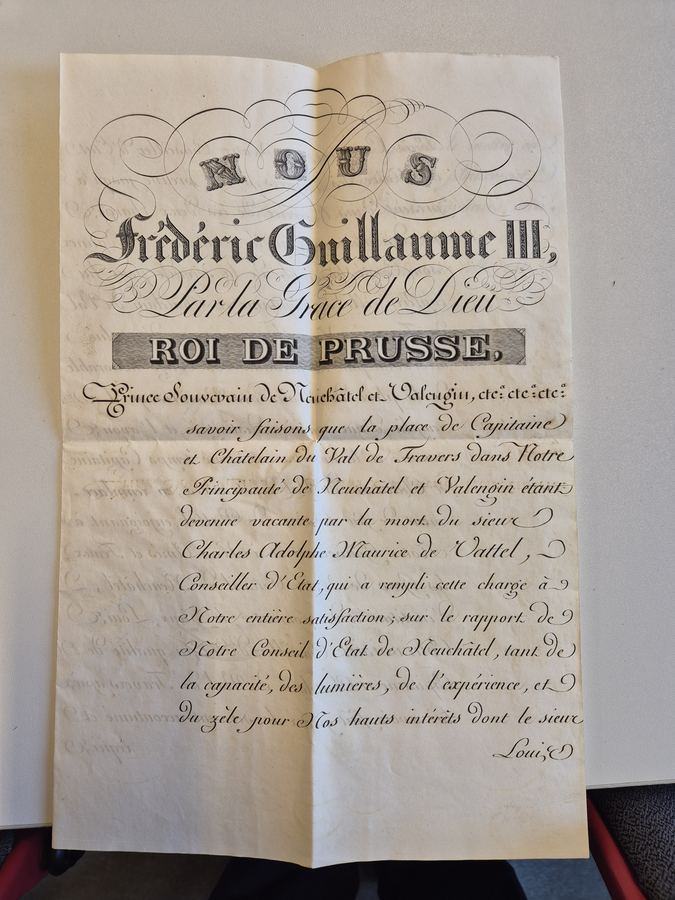
Manuscript letter headed Nous Frédéric Guillaume III, par la grâce de Dieu, Roi de Prusse
Letters of Frédéric‑Guillaume III, King of PrussiaSovereign prince of Neuchâtel · archives, La Chaux‑de‑Fonds, consulted May 2026.
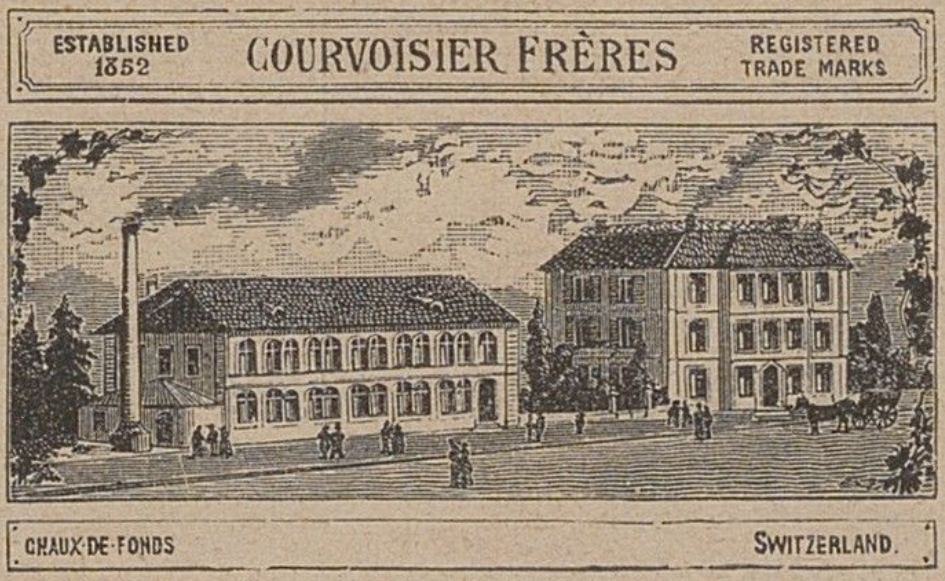
Engraving of the Courvoisier Frères factory buildings, headed Established 1852, Registered Trade Marks
The manufacture, Courvoisier FrèresFactory engraving · “Established 1852 — Registered Trade Marks”.
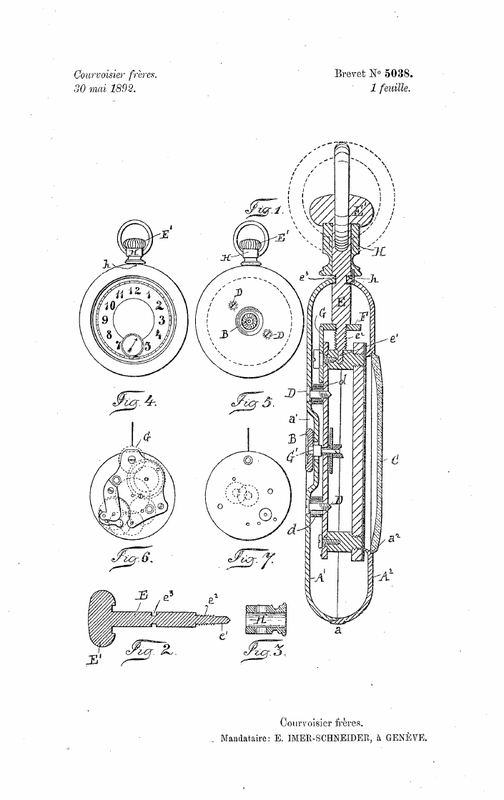
Patent drawings of a pendant winding mechanism, Swiss patent 5038, Courvoisier Frères, 1892
Swiss patent N° 5038, 30 May 1892Pendant winding, improved · Courvoisier Frères.
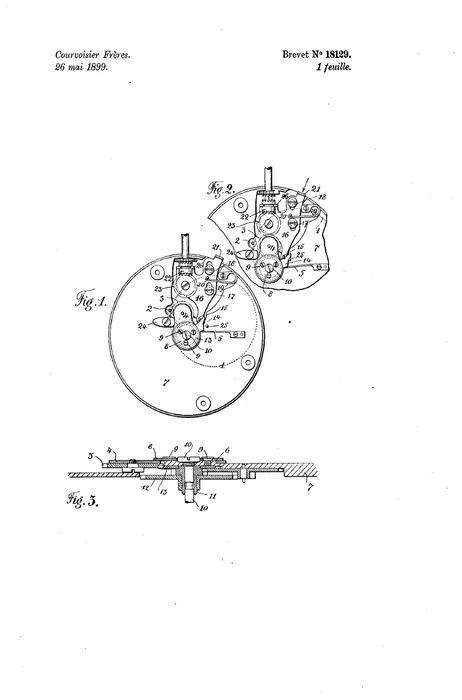
Patent drawings of a hand-setting mechanism, Swiss patent 18129, 1899
Swiss patent N° 18129, 26 May 1899Setting mechanism · Courvoisier Frères.
Front page of Swiss patent 27838/538, Gabriel López Mántaras, Saragossa
Swiss patent N° 27838, 5 May 1903Gabriel López Mántaras, Saragossa · the Modernista mechanism.
Register entry: N° 16713, 26 décembre 1903, MODERNISTA, Courvoisier Frères
Mark MODERNISTA, N° 16 71326 December 1903 · Courvoisier Frères, montres de poche.
Open pages of the Almanach de l’horlogerie 1905 describing La montre Modernista
Almanach de l’horlogerie, 1905“La montre Modernista”, pp. 72–73.
Front page of Swiss patent 30754/568, Paul Loichot, 1905
Swiss patent N° 30754 / 568, 1904–1905Paul Loichot · the Mobilis tourbillon, for Courvoisier Frères.
Trade mark registration: 4 juillet 1905, N° 19062, MOBILIS, Courvoisier Frères
Mark MOBILIS, N° 19 0624 July 1905 · Courvoisier Frères, fabricants, Chaux‑de‑Fonds.
Advertisement: Courvoisier Frères, La Chaux-de-Fonds, Montre Mobilis, nouvelle montre 19 lignes tourbillon
“Montre Mobilis — Tourbillon”Advertisement, c. 1905 · système breveté en tous pays.
Patent drawings of a tourbillon watch movement, Swiss patent 37771, 1906
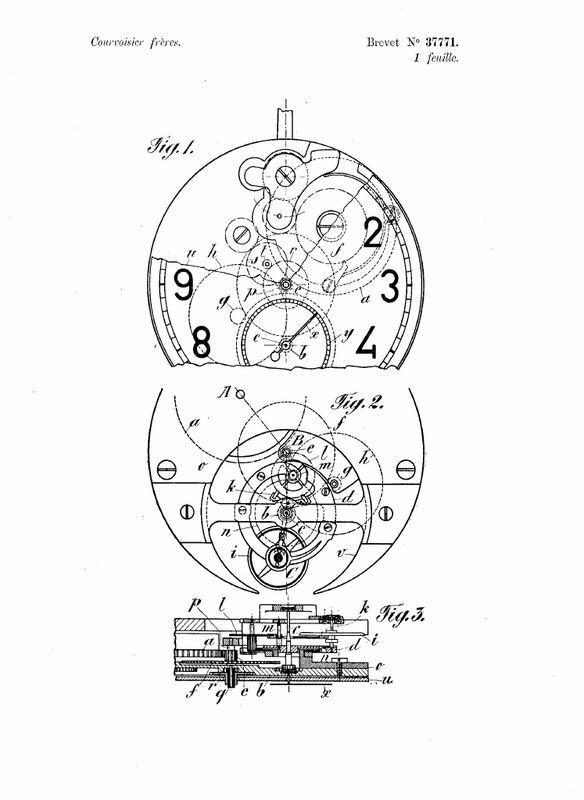
Swiss patent N° 37771, 27 October 1906Tourbillon visible through the back · Courvoisier Frères.
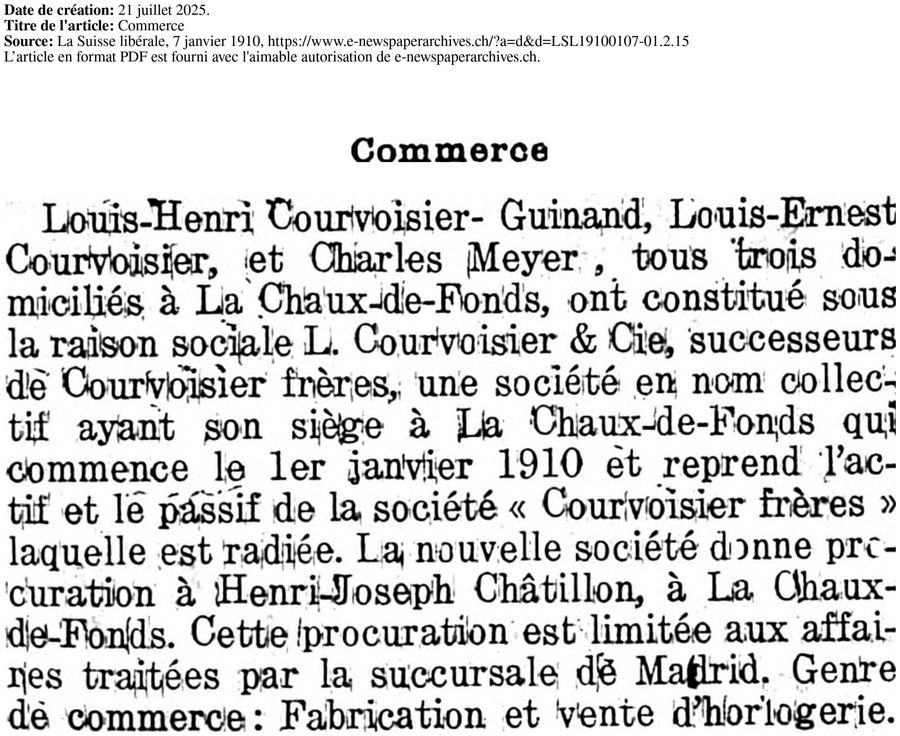
Newspaper notice: Louis-Henri Courvoisier-Guinand, Louis-Ernest Courvoisier and Charles Meyer
La Suisse libérale, 7 January 1910L. Courvoisier & Cie succeeds Courvoisier Frères · a branch in Madrid.
Front page of Swiss patent 69202, brevet principal, L. Courvoisier & Co, La Chaux-de-Fonds
Swiss patent N° 69202, 11 September 1914Waterproof watch case · L. Courvoisier & Cie.
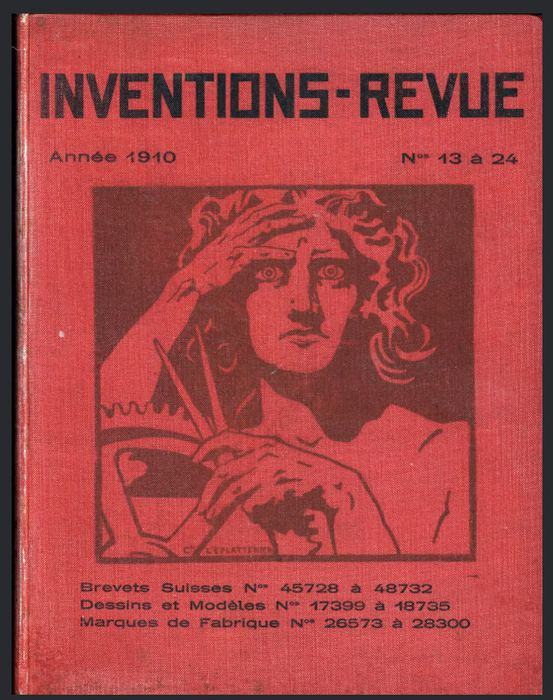
Red cover of Inventions-Revue, année 1910, listing Swiss patents, designs and trade marks
Inventions‑Revue, 1910Marks N° 26 573 – 28 300 · the Madix era.
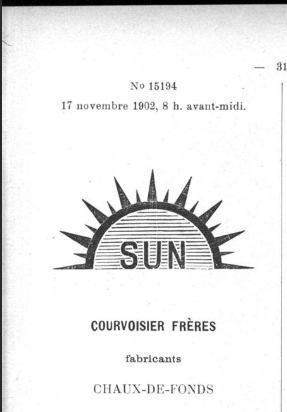
Register entry for the mark SUN, Courvoisier Frères, 1902
Mark SUN, 17 November 1902Courvoisier Frères · mouvements, cadrans, boîtes et étuis.
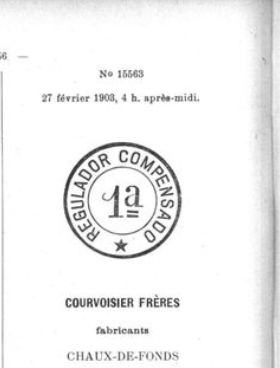
Register entry for the mark Regulador Compensado, Courvoisier Frères, 1903
Mark REGULADOR COMPENSADO, 1903Courvoisier Frères · for the Spanish‑speaking markets.
Museum label: Vers 1830, Frédéric Courvoisier, La Chaux-de-Fonds, horloge de voyage, Inv. IV-109
Museum label, inv. IV‑109Musée international d’horlogerie · “Frédéric Courvoisier, La Chaux‑de‑Fonds, horloge de voyage, vers 1830”.

Chronologie

A house told in dates, 1725 to the present.

1725

Josué Robert receives the watchmaker’s patent of the King of Prussia, sovereign of Neuchâtel. La Chaux‑de‑Fonds.

1781

Louis Courvoisier becomes principal associate of the Robert workshop.

1784

Notarial deed: “Robert J. et fils, Courvoisier et Cie” — Répertoire raisonné des horlogers neuchâtelois, vol. III.

1787

J. Robert & Fils, Courvoisier & Cie. The founding year of the Maison.

c. 1790

Silver watch with a gold figure, signed Genève N° 50272 — MIH inv. I‑159.

1795

Robert & Courvoisier: the era of the enamel automaton watches.

1811

Courvoisier & Cie — La Chaux‑de‑Fonds, Genève, Paris.

1842

The flattest watch in the world, for Friedrich Wilhelm IV. Courvoisier Frères.

1848

1 March — Fritz Courvoisier leads the republican column to the Castle of Neuchâtel.

c. 1850

Portrait watches for Sultan Abdülmecid I — Topkapı TSM 53/184.

1851

Fritz Courvoisier, commissioner at the Great Exhibition, London.

1892

Patent CH 5038, pendant winding.

1893

Courvoisier & Co., Genève–Versoix, honoured as Commandeur of the Order of Christ of Portugal.

1897

Patent CH 15360, winding and time-setting mechanism — Courvoisier Frères.

1903

Modernista — jumping hour, retrograde minutes. Patent CH 27838 · mark N° 16 713.

1905

Mobilis — the tourbillon seen through the dial. Patent CH 30754 · mark N° 19 062.

1906

Patent CH 37771, tourbillon visible through the back.

1910

L. Courvoisier & Cie succeeds Courvoisier Frères; a branch in Madrid.

1914

Patent CH 69202, waterproof wristwatch case. The ateliers de réglage at rue du Pont 13 authorised.

1919

The MADIX mark — la montre à dix.

1921

The atelier de terminage at rue des Terreaux 33 authorised.

1987

Courvoisier et Cie, La Chaux‑de‑Fonds — Olivier Courvoisier administrateur, 1987 to 2016.

1995

Swiss mark COURVOISIER 1787, Class 14.

2019

The Musée international d’horlogerie repatriates the Fritz Courvoisier dance‑card watch with State funds.

2023

Ceremony honouring Fritz Courvoisier at the Castle of Neuchâtel, attended by descendants of the family.

2026

Genève. The first Métiers d’Art dial, Les Jours d’Alcyone, enters production.
Continuity

Stewardship.

From the royal patent of 1725 through the factory authorisations of the twentieth century and the trademark registrations of the modern era, the name has remained in the Swiss registers without interruption. The family name stood at the head of the house into the twenty‑first century.
1914

Ateliers de réglage authorised

Arrêté of the Conseil d’État of Neuchâtel, 21 April 1914: the regulating workshops of L. Courvoisier & Cie, rue du Pont 13, La Chaux‑de‑Fonds, inspected and authorised under federal factory law.

1921

Atelier de terminage authorised

Decision of the Département de l’Intérieur, 8 April 1921: the finishing workshop of the Manufacture de montres L. Courvoisier & Cie, rue des Terreaux 33, communicated to the Federal Factory Inspector.

1995

COURVOISIER 1787 registered

Swiss word mark N° 417148, Nice Class 14, filed 3 January 1995 and maintained in force through successive prolongations. The Courvoisier marks for timepieces are held today by the Maison in its principal jurisdictions.

“A house with a continuous presence since 1787 asks for one thing of those who hold it: stewardship.”

Olivier Courvoisier, a member of the founding family, served as administrateur of the house in La Chaux‑de‑Fonds from 1987 to 2016. The Maison continues today under new stewardship, its ateliers in Genève and La Chaux‑de‑Fonds drawing on an archive of documented significance and on the technical and aesthetic standards that earned institutional recognition across more than two centuries.

Silence, here, is not absence. It is the interval before precision.
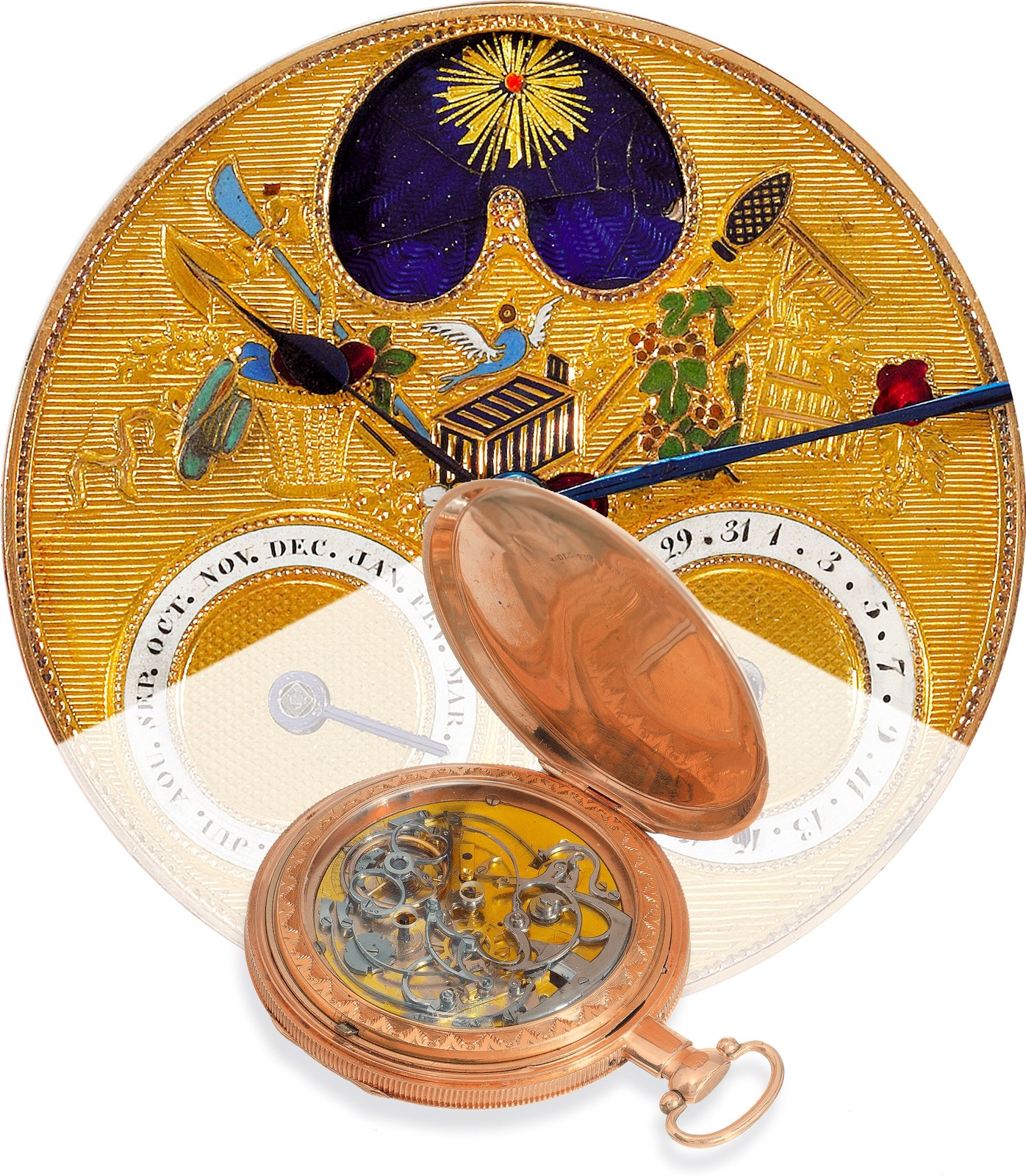
Engine-turned gold calendar dial with applied polychrome enamel, moon phases, month and date subdials, shown with its case and skeletonised movement
Calendar dial with moon phasesEngine‑turned gold with applied polychrome enamel; months and date in subsidiary dials, the phases of the moon beneath a gilt sun · shown with its case and skeletonised movement.
Une conversation

The Maison receives collectors, enthusiasts and prospective partners by appointment.

The Maison does not sell from this page. Each piece is allocated to one collector after a conversation — in Genève, or wherever you are. Requests are read personally and answered within a few days. Priority is given to collectors whose interest aligns with the Maison’s work.

Genève

41A route des Jeunes
1227 Genève, Switzerland · visits by appointment

La Chaux‑de‑Fonds

The founding city, canton of Neuchâtel · ateliers by appointment

Services

Restoration and servicing of Courvoisier timepieces from the archive; informed opinions on attribution on the submission of photographs of the case, caseback and cuvette. Press and institutions: by request.

concierge@maisoncourvoisier.ch

    Your details are used only to answer you. Nothing is shared, nothing is added to a list.